Home Month: February 2026

Month: February 2026

Why Power Supply Design Determines the Life of Smart Grid Hardware

When smart grid hardware fails in the field, the cause is often attributed to electronics, firmware, or environmental exposure. In reality, many of these failures begin much earlier and much deeper in the system.

They begin at the power supply.

Meters, NICs, AMR devices, and gateways are only as reliable as the power that feeds them. In Indian distribution networks, that power is rarely clean, stable, or predictable. Voltage fluctuations, harmonics, momentary brownouts, and surges are part of daily operation. Hardware that is not designed to survive these conditions may function initially, only to degrade quietly over time.

Power supply design is therefore not an accessory choice. It determines whether smart grid hardware survives years in the field or fails prematurely.

The Reality of Power Quality in Distribution Networks

Distribution grids are dynamic systems. Loads change throughout the day, switching events are frequent, and renewable sources introduce variability. These conditions manifest as:

  • Voltage swings beyond nominal limits

  • Harmonic distortion from non-linear loads

  • Momentary brownouts during peak demand

  • Transient spikes during switching or fault events

While meters and communication devices experience these conditions continuously, many power supplies are designed assuming far cleaner input profiles. The mismatch between assumption and reality is where failures begin.

How Poor Power Supply Design Shortens Device Life

Power supplies that lack proper isolation, surge handling, or thermal resilience often fail gradually rather than catastrophically. Components run hotter. Capacitors age faster. Noise couples into sensitive circuits.

The symptoms are subtle:

  • Intermittent device resets

  • Communication dropouts without clear cause

  • Gradual increase in failure rates after the first year

  • Devices that pass lab tests but fail unpredictably in the field

These issues are difficult to trace back to the power supply, which is why they are often misattributed to electronics or software.

Why Isolation and Surge Tolerance Matter

Isolation protects devices from ground potential differences and transient events that occur regularly in distribution networks. Without adequate isolation, voltage spikes and noise propagate directly into logic and communication circuits.

Surge tolerance ensures that switching events and fault-related spikes do not permanently damage components. In grids where switching is frequent, this protection is essential.

Probus power supplies are designed with these realities in mind. Both the Power Supply 3PH and the 4G AMR Power Supply incorporate isolation and protection strategies aligned with grid behavior, not idealized inputs.

Thermal Design as A Reliability Multiplier

Heat accelerates failure. Power supplies operating in compact enclosures, often without active cooling, must dissipate heat efficiently to avoid long-term degradation.

Thermal design influences:

  • Component lifespan

  • Voltage regulation stability

  • Noise performance

  • Overall device reliability

Inadequate thermal margins may not cause immediate failure, but they shorten operational life dramatically. Designing for sustained thermal stress is a necessity in Indian grid environments.

Designing for Grid Reality Not Lab Conditions

Laboratory testing validates functionality. Field reality tests resilience.

Probus designs power supplies with the assumption that voltage will fluctuate, harmonics will be present, and ambient temperatures will rise. Designs are validated not just for compliance, but for endurance.

This approach ensures that downstream devices remain stable even when upstream power conditions are imperfect. Reliability is built in at the foundation, not added later through software workarounds.

The Hidden Cost of Ignoring Power Supply Design

When power supply design is overlooked, the cost is rarely immediate. It appears over time as higher failure rates, increased field visits, and unexplained downtime.

By contrast, investing in robust power supply design reduces total cost of ownership. Devices last longer. Data remains stable. Maintenance becomes predictable.

For utilities, this translates into trust in infrastructure and confidence in long-term deployments.

Power as The First Engineering Decision

Smart grid hardware is often judged by its features. In practice, its lifespan is determined by how it handles power.

By treating power supply design as a first-order engineering decision, Probus ensures that its devices survive the realities of distribution networks. Not just on day one, but year after year.

In the grid, clean power is rare. Reliable hardware is designed accordingly.
Gateways as Grid Orchestrators: How One Device Shapes Thousands of Meter Conversations

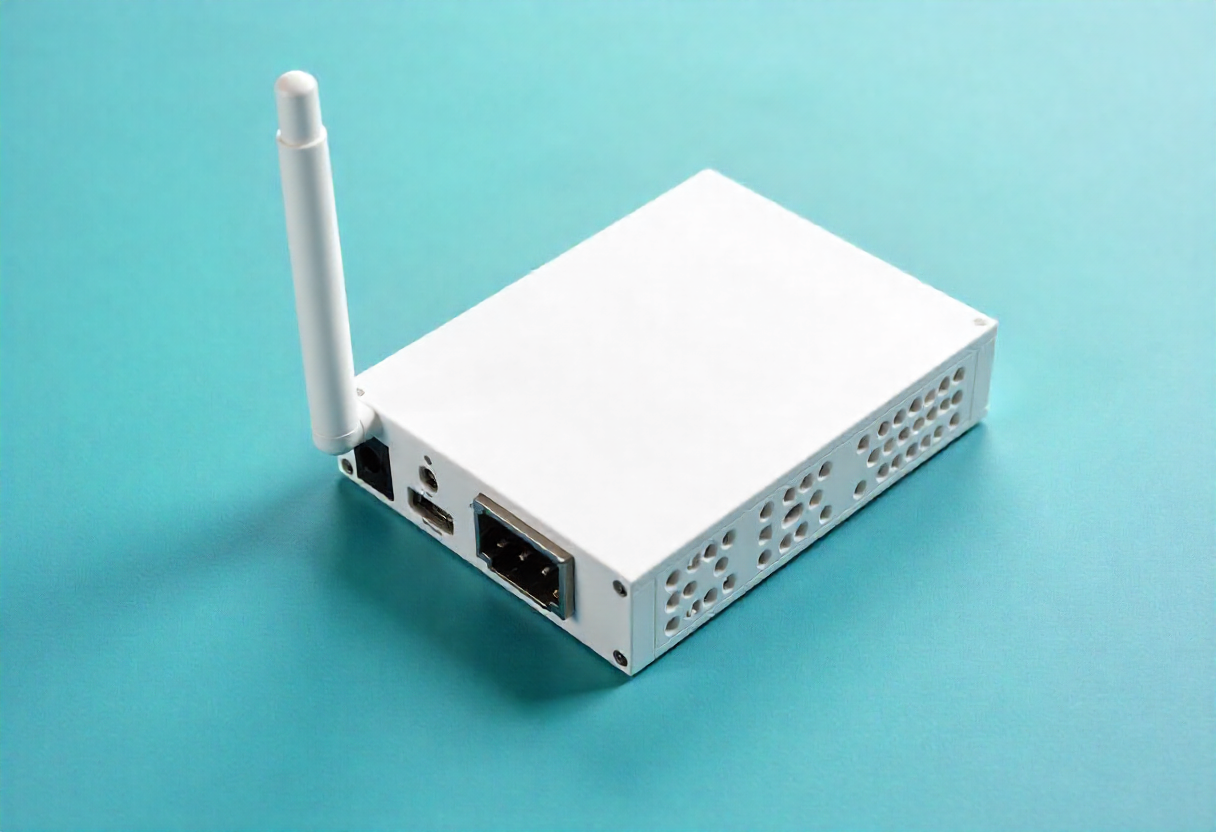
Gateways are often described as simple routers. They sit between meters and central systems, passing data upstream and commands downstream. Because they are rarely visible to end users, their role is often underestimated.

In reality, the gateway is one of the most influential devices in a smart metering system. It determines how thousands of meters communicate, how quickly data arrives, and how reliably the network behaves under load. When gateways perform poorly, the entire grid conversation slows down. When they perform well, communication feels effortless.

Understanding this role is critical as smart metering scales.

Why Gateways Are Not Passive Devices

A gateway does far more than forward packets. It manages communication timing, prioritizes retries, balances traffic, and resolves conflicts when many devices attempt to transmit at once.

In large deployments, hundreds or thousands of meters may depend on a single gateway. Each meter generates periodic data, retry attempts, and exception messages. Without intelligent orchestration, this traffic quickly becomes congested.

Gateway logic determines:

  • How transmission windows are scheduled

  • How retries are handled during packet loss

  • How latency is managed during peak communication cycles

  • How data completeness is preserved under stress

These decisions directly affect whether utilities receive clean, usable data or fragmented, delayed streams.

Latency, Retries, and Data Completeness

From a system perspective, missing data is often more damaging than delayed data. Gateways must decide when to retry, when to wait, and when to drop requests to keep the network stable.

Poorly designed logic can create retry storms where repeated failures compound congestion. Well-designed gateways smooth traffic by pacing communication, aggregating responses, and prioritizing critical messages.

Probus gateways are built with this orchestration role in mind. Their firmware and processing logic are designed to maintain data completeness without overwhelming the network.

Why PCB Design Matters in The Field

Gateway reliability is not determined by software alone. The physical design of the Gateway Master PCB plays a critical role, especially in harsh grid environments.

Gateways often operate in:

  • High-temperature enclosures

  • Electrically noisy substations or cabinets

  • Locations with inconsistent power quality

  • Environments with vibration or dust

PCB layout affects thermal dissipation, signal integrity, and resistance to electrical noise. A board designed for lab conditions may degrade quickly in the field, leading to intermittent failures that are difficult to diagnose.

Probus treats PCB design as a reliability foundation, not a manufacturing detail. Stable hardware ensures that orchestration logic remains effective over years of operation.

Scaling When Thousands of Meters Speak at Once

The true test of a gateway is scale. Communication patterns change dramatically as deployments grow.

At a small scale, networks appear stable. At a large scale, synchronization effects emerge. Thousands of meters may attempt to report simultaneously after a power restoration or scheduled event.

Without intelligent handling, this can lead to:

  • Data loss during recovery windows

  • Extended delays in read completion

  • Unnecessary retries that overload upstream systems

Gateways must absorb these bursts, regulate traffic, and release data in a controlled manner. This is where orchestration becomes visible.

Reducing Congestion and Improving Uptime

Probus gateways are designed to manage congestion rather than react to it. By controlling communication pacing and intelligently aggregating data, they reduce stress on both local networks and central servers.

This results in:

  • Higher data availability during peak events

  • Faster recovery after outages

  • Lower communication failure rates

  • Reduced operational intervention

Uptime improves not because networks are perfect, but because gateways are built to handle imperfection gracefully.

The Gateway as A System Intelligence Layer

In modern grids, intelligence is distributed. Meters sense. Sensors detect. Analytics interpret. Gateways connect these layers.

When gateways function as orchestrators rather than pipes, they enable the entire system to operate smoothly. When they fail, complexity surfaces everywhere else.

This is why Probus treats gateways as critical infrastructure. Their design reflects an understanding that communication stability is a system outcome, shaped by hardware, firmware, and operational context.

Why Deep Gateway Design Matters

As utilities scale smart metering and grid intelligence, the difference between theoretical performance and real-world reliability becomes apparent. Gateways sit at that boundary.

By focusing on orchestration, hardware resilience, and scalability, Probus gateways support large deployments without sacrificing data quality or uptime.

The grid does not speak in single conversations. It speaks in thousands at once. The gateway decides whether those conversations remain coherent.

Inside the Feeder Pillar: Why FSP Monitoring Is the Missing Link in LV Grid Visibility

In most distribution networks, attention flows from substations outward. SCADA systems track high-voltage behavior. Feeders are monitored at aggregate levels. Smart meters capture consumption at endpoints. Somewhere in between sits the feeder pillar, quietly absorbing stress without much attention.

This is where many low-voltage failures actually accumulate.

Feeder pillars are exposed, overloaded, frequently accessed, and rarely monitored in real time. When something goes wrong here, the impact ripples across entire neighborhoods. Yet in many utilities, the feeder pillar remains a blind spot until a complaint, outage, or visible damage forces action.

This gap between substation intelligence and last-mile awareness is where FSP monitoring becomes critical.

Why Feeder Pillars are High-Risk High-Impact Nodes

Feeder pillars handle distribution switching, load branching, and protection for multiple downstream connections. They experience frequent switching operations, load fluctuations, and environmental exposure.

Common issues at feeder pillars include:

  • Overheating due to sustained overload or loose connections

  • Voltage instability caused by imbalanced downstream demand

  • Fire risk from insulation failure or unauthorized modifications

  • Manual switching errors that go unrecorded

  • Delayed fault detection because no data is available until failure

Despite this risk profile, feeder pillars are often checked only during scheduled inspections or after an outage has already occurred.

The Cost of Discovering Failures too Late

When a feeder pillar fails, the response clock starts late. Utilities often learn about the problem through customer complaints, not system alerts. By the time field teams arrive, damage has already escalated.

Late discovery leads to:

  • Longer outages affecting multiple consumers

  • Higher repair costs due to secondary damage

  • Safety risks for nearby residents and field staff

  • Poor reliability metrics and customer dissatisfaction

Most of these costs are not caused by the fault itself, but by the delay in detecting it.

What Changes When Feeder Pillars are Monitored

FSP monitoring devices introduce real-time visibility into feeder pillars. Instead of relying on periodic checks, utilities gain continuous awareness of what is happening inside these critical nodes.

Key parameters such as voltage levels, on-off status, and internal temperature or fire indicators provide immediate context. When something abnormal occurs, alerts are generated before failure cascades downstream.

This changes response timelines dramatically. Field teams move from reacting to outages to preventing them.

Voltage Status and Fire Detection as Early Signals

Feeder pillar failures rarely occur without warning. Stress accumulates quietly in the form of voltage fluctuations, abnormal switching patterns, and rising heat long before visible damage appears. The challenge for utilities has never been the absence of signals, but the absence of continuous visibility.

Voltage monitoring acts as the earliest indicator. It exposes overload, phase imbalance, and upstream stress conditions that slowly weaken insulation and components over time. These patterns often emerge days or weeks before a fault becomes a failure.

On-off status tracking brings precision to fault analysis. Every switching event is logged, removing ambiguity around manual intervention, unintended outages, or delayed restoration. This accountability shortens diagnosis cycles and reduces repeated site visits.

Fire and temperature detection address the most vulnerable point in the low-voltage network. Early thermal alerts provide a critical window to intervene before overheating escalates into equipment damage, service disruption, or safety incidents.

Taken together, these signals transform feeder pillars from blind spots into continuously monitored assets, offering a real-time view of network health rather than post-failure explanations.

Connecting Substation Intelligence to Last-Mile Reality

Substations may show normal behavior while feeder pillars struggle under localized load conditions. Without intermediate visibility, utilities miss this disconnect.

FSP monitoring bridges that gap. It links high-level grid intelligence with street-level reality. When combined with LV sensors and AMR data, it completes the visibility chain from substation to consumer.

This integration allows utilities to understand how stress propagates through the network rather than discovering it only after failure.

Inside The FSP Monitoring Approach

The FSP Monitoring Device and its internal architecture are designed for harsh field conditions. They operate within constrained enclosures, tolerate electrical noise, and function continuously without frequent intervention.

Their role is not to add complexity, but to surface clarity where it was previously absent. Simple, reliable signals from the feeder pillar often prevent complex downstream failures.

Why Feeder Pillar Visibility Changes Grid Operations

Once feeder pillars are monitored, utilities begin to see patterns that were previously invisible. Certain locations show repeated stress. Certain load profiles trigger predictable issues. Maintenance shifts from routine schedules to targeted action.

This improves:

  • Outage response speed

  • Asset life at the edge of the network

  • Safety for both consumers and field staff

  • Trust in grid performance data

Most importantly, it reduces the number of surprises.

Solving Real Operational Pain

Feeder pillar monitoring is not a theoretical upgrade. It addresses one of the most common field frustrations in distribution networks: knowing that something is wrong only after it fails.

By placing intelligence where failures originate, Probus helps utilities regain control over the LV grid. The feeder pillar stops being a silent risk and becomes an observable, manageable asset.

In a grid that is becoming more distributed, more loaded, and more complex, visibility at this level is no longer optional. It is the missing link.