Home Author: admin

Author: admin

How IoT-Based Smart Grid Integration Improves Outage Management and Fault Detection

Every unplanned power outage in India tells two stories. The first is the one consumers experience – the inconvenience, the disrupted operations, the economic cost of interrupted supply. The second is the one utilities live through – the frantic phone calls to the control room, the field teams dispatched without precise location information, the manual restoration process that takes far longer than it should, and the post-event uncertainty about what actually caused the fault.

For decades, both of these stories have played out the same way, driven by the same fundamental problem: most of India’s distribution grid has been operating blind. Without real-time visibility into what is happening at the feeder, Distribution Transformer, and consumer level, outages are detected reactively – when consumers complain – and faults are located through manual field inspection rather than data-driven diagnosis.

IoT-based smart grid integration is changing both stories. By embedding connected sensing, monitoring, and communication capabilities throughout the distribution network – from the substation to the last-mile feeder – it gives utilities the real-time grid visibility that transforms outage management from a reactive scramble into a proactive, data-driven operation. This blog explains how that transformation happens, what it means for Indian DISCOMs, and what a well-designed IoT smart grid system looks like in practice.

The Core Problem: Why Traditional Outage Management Falls Short

To understand why IoT-based smart grid integration matters so much for outage management and fault detection, it helps to be clear-eyed about how the process works without it – and why that approach is fundamentally inadequate for a modern distribution network.

In a conventional distribution grid, the utility’s awareness of an outage depends primarily on consumer calls to the helpline. When supply fails at a consumer’s premises, they call to report it. The call centre logs the complaint, a field crew is dispatched to investigate, and restoration proceeds – guided by the crew’s knowledge of the network topology and their physical inspection of the infrastructure.

This process has several compounding problems. First, there is an inherent time delay between when an outage occurs and when enough consumers have called to allow the utility to identify its approximate location. Second, the field crew dispatched to investigate often knows only that there is a fault somewhere in a particular section of the network – not exactly where, or what caused it. Third, restoration verification depends on the field crew confirming supply has been restored, or waiting for consumer callbacks to stop – neither of which is precise or timely.

The result is that Mean Time to Repair (MTTR) – the average time between an outage occurring and supply being restored – is far higher than it needs to be. And every additional minute of outage duration represents real economic cost: to consumers whose operations are disrupted, and to the DISCOM whose AT&C losses increase during unmetered supply interruption periods.

Beyond outages, incipient faults – deteriorating cable insulation, corroded connections, overloaded transformers approaching failure – are invisible in a grid without continuous monitoring. These faults develop gradually, often over weeks or months, before triggering an acute failure. Without the ability to detect them early, the utility can only respond after the failure has occurred – by which point the damage is done and a planned maintenance intervention has become an emergency repair.

What IoT Smart Grid Integration Actually Means

The phrase “IoT smart grid integration” covers a broad technology landscape. For the purposes of outage management and fault detection – the operational functions that most directly affect DISCOM performance and consumer service quality – the relevant components are:

1. Smart Meters as Grid Sensors

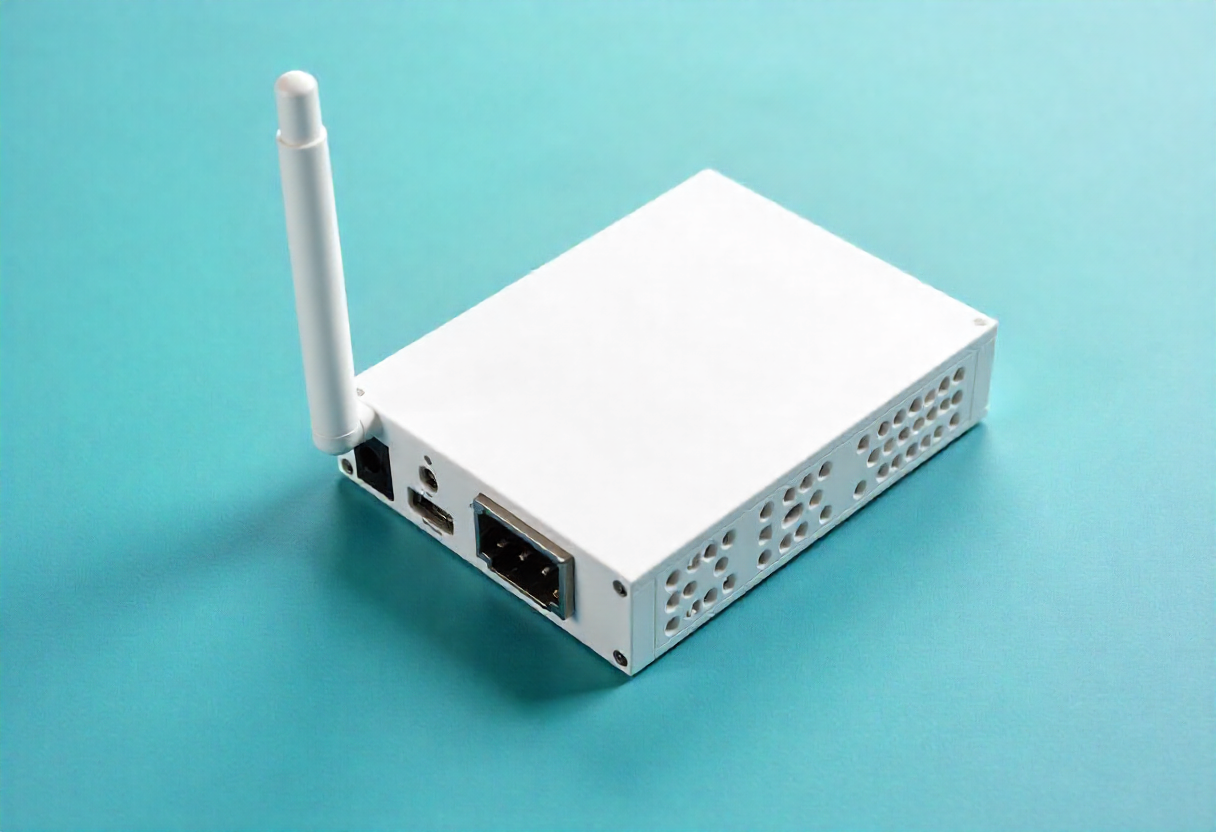
The smart meters deployed under RDSS and other metering programmes are not just billing devices. They are distributed sensors embedded throughout the low-voltage network. Every smart meter continuously monitors voltage at the point of supply, logs power outage and restoration events with precise timestamps, detects tamper events, and measures power quality parameters.

When a fault causes supply to fail, meters at the affected premises send a “last gasp” signal – a brief transmission made using the meter’s internal capacitor power reserve in the milliseconds before supply is completely lost. These last gasp signals arrive at the Head-End System almost simultaneously with the fault event itself, giving the control room instant awareness of which meters have lost supply – without waiting for a single consumer call.

By mapping the geographic pattern of meters reporting loss of supply, the MDMS can identify the probable location of the fault with significant precision – narrowing the search from an entire feeder section to a specific DT or cable segment. This transforms the field crew’s task from open-ended investigation to targeted intervention.

This is the foundation of how Probus’s smart metering solutions contribute directly to grid operational intelligence – the meter is not just a data collection device for billing, but a sensing node in a broader IoT grid monitoring network.

2. Distribution Transformer Monitoring

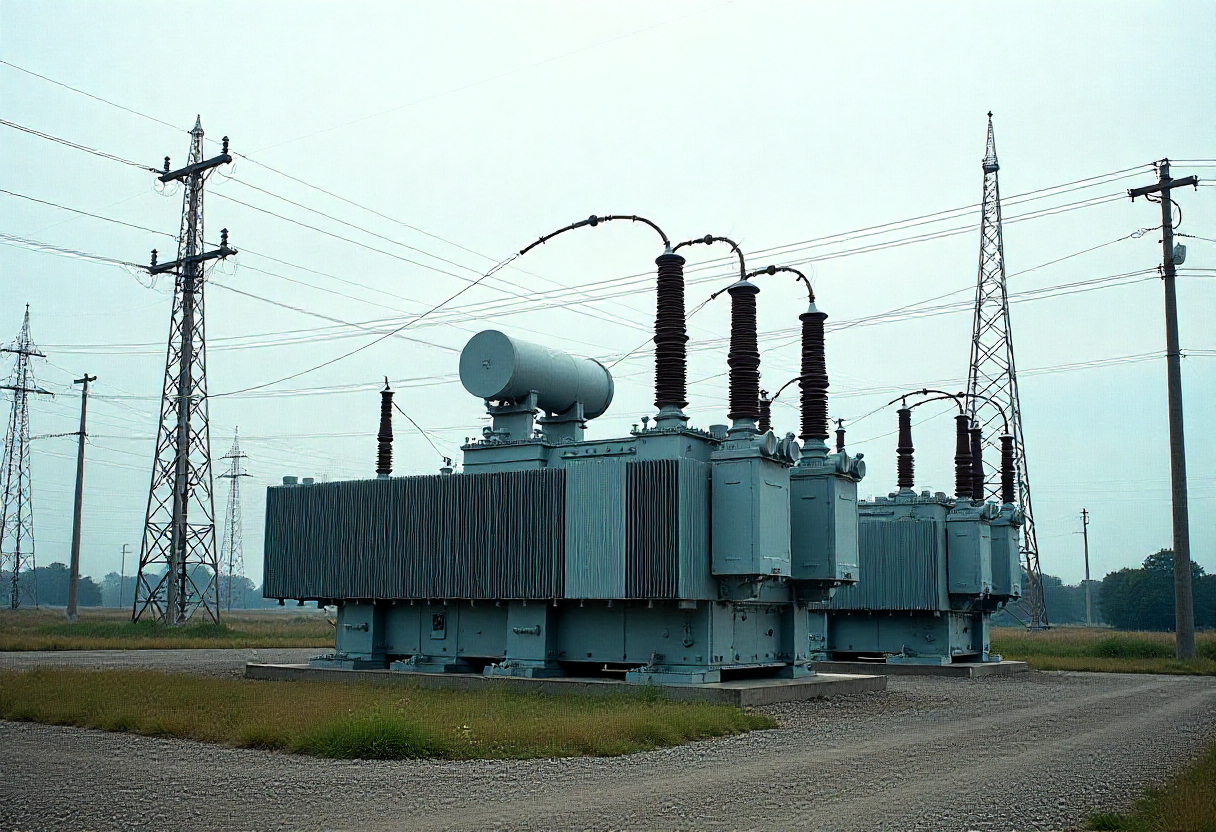
The Distribution Transformer is one of the most critical – and most vulnerable – assets in the low-voltage distribution network. DTs are subject to overloading, oil degradation, winding insulation failure, and the cumulative stress of irregular load patterns. In India, premature DT failure is a significant operational and capital cost for most DISCOMs – both because of the direct cost of transformer replacement and because of the supply interruption that accompanies failure.

IoT-based DT monitoring devices measure load current, voltage, oil temperature, and power factor continuously at the transformer level. By analysing these parameters in real time and trending them over time, the monitoring system can identify DTs that are running hot, overloaded, or showing early signs of insulation degradation – weeks or months before a catastrophic failure occurs.

This enables a shift from reactive DT replacement – waiting for failure – to predictive maintenance – intervening before failure, at a time and in a manner that is planned, cost-effective, and does not result in unplanned supply interruption. For a DISCOM managing thousands of DTs across its network, the cumulative operational and capital cost savings from predictive DT maintenance are substantial.

3. Feeder and Substation Automation

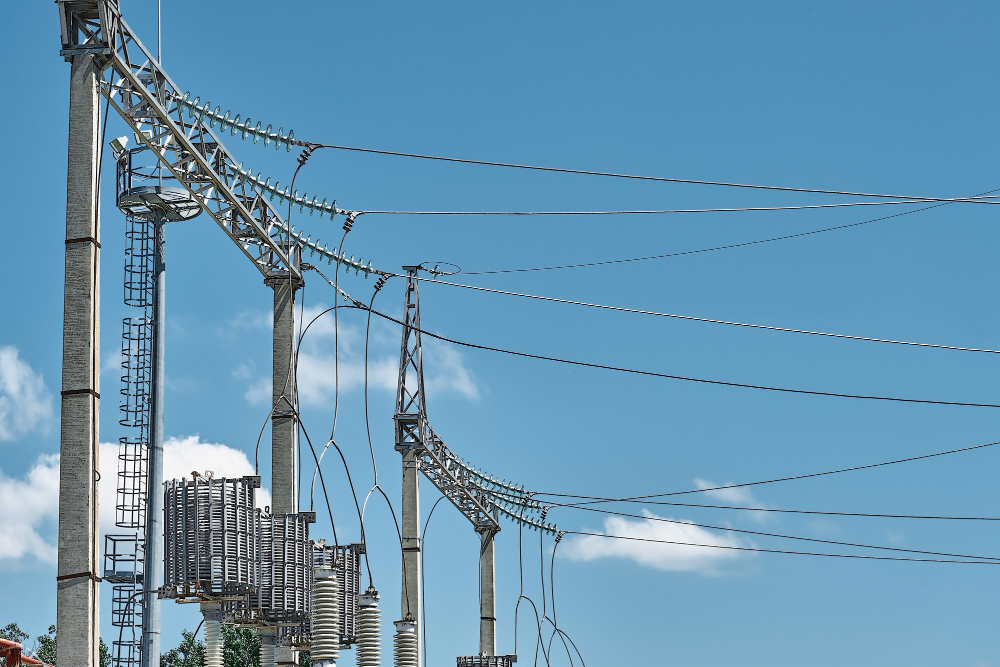
At the feeder and substation level, IoT integration involves the deployment of remote terminal units (RTUs), intelligent electronic devices (IEDs), and automated switching equipment that can be monitored and controlled from a central SCADA or Distribution Management System (DMS). Fault indicators installed along feeder lines detect and log fault current events, allowing the control room to identify not just that a fault has occurred but at which point along the feeder it is located.

In networks equipped with automated sectionalising switches, fault isolation and network reconfiguration can be performed remotely – isolating the faulted section and restoring supply to the unaffected portions of the feeder without requiring a field crew to manually operate switching equipment. This dramatically reduces the number of consumers affected by a fault and the duration of supply interruption for those who are.

4. Power Quality Monitoring

Beyond outage events, the IoT energy meter and grid sensor network continuously monitors power quality parameters – voltage sags and swells, harmonic distortion, frequency deviation, and power factor. These parameters affect both consumer equipment reliability and grid asset health. Chronic voltage sags in a particular feeder section may indicate a network impedance problem. Persistent harmonic distortion may signal the proliferation of non-linear loads that are affecting grid power quality.

Real-time power quality monitoring allows the utility to identify and address these conditions proactively – before they result in consumer complaints, equipment damage, or regulatory non-compliance. It also provides the data needed to plan network reinforcement investments based on actual power quality conditions rather than theoretical load projections.

From Data to Action: How Real-Time Grid Monitoring Works in Practice

The value of IoT smart grid integration is not in the data itself – it is in what the utility does with that data. The operational workflow that translates real-time energy monitoring system data into improved outage management looks like this:

Step 1 – Event Detection: A fault occurs on the network. Smart meters in the affected area send last gasp signals. DT monitoring devices log the loss of secondary voltage. Fault indicators on the feeder register the fault current event. All of these signals arrive at the central monitoring platform within seconds of the fault occurring.

Step 2 – Fault Location: The monitoring platform analyses the pattern of signals – which meters reported supply loss, which DT monitoring device registered a voltage drop, which feeder fault indicator logged a current event – and uses network topology data to calculate the probable location of the fault. An alert is generated in the control room with the fault’s likely location identified to a specific feeder section or DT.

Step 3 – Field Dispatch: Instead of dispatching a crew with a general instruction to “investigate a fault on Feeder X,” the control room dispatches a crew to a specific location – the section of feeder identified by the fault location analysis – with information about the type of fault event that was recorded. The crew arrives prepared for what they are likely to find.

Step 4 – Isolation and Restoration: In networks with automated switching, isolation of the faulted section and restoration to unaffected consumers may be completed remotely before the field crew arrives. In networks without full automation, the precise fault location data still significantly reduces the time the crew spends physically locating the fault before they can begin repair.

Step 5 – Restoration Verification: When supply is restored, smart meters in the previously affected area send power-on notifications. The monitoring platform confirms restoration automatically – the control room can see, in real time, which meters have supply back and which do not, without relying on field crew reports or consumer callbacks.

This five-step data-to-action workflow is what real-time grid monitoring actually delivers in operational terms. It is not a theoretical improvement – it is a measurable reduction in MTTR that DISCOMs implementing IoT-based grid monitoring consistently report once their systems are fully operational.

Distribution Automation India: The AT&C Loss Connection

The connection between IoT smart grid integration and AT&C loss reduction goes beyond outage management. Real-time network visibility enables a range of loss-reduction capabilities that are simply not possible without continuous, granular monitoring data.

Energy Balancing and Loss Localisation

When smart meters are deployed at the consumer level and DT meters are deployed at the transformer level, the monitoring system can continuously compare the energy measured at each DT against the sum of energy measured by all meters connected downstream. Any consistent gap between these two figures indicates a loss – whether technical (cable losses, transformer no-load losses) or commercial (theft, unbilled connections, meter bypass).

The ability to perform this energy balance calculation at the DT level – not just at the substation or feeder level – localises loss to specific sections of the network. Instead of knowing that a DISCOM has 18 percent AT&C losses overall, the utility knows that Transformer X on Feeder Y has a 35 percent loss gap and Transformer Z on the same feeder has a 4 percent loss gap. That precision transforms loss reduction from a general programme into a targeted, prioritised intervention effort.

Tamper Detection and Theft Identification

Smart meters connected to an IoT monitoring platform generate tamper event logs in real time – cover open events, magnetic field interference detections, neutral disturbance alerts, and load profile anomalies that suggest meter bypass. When these events are correlated with energy balance data from the relevant DT, the monitoring system can identify not just that a tamper event occurred, but whether it correlates with an unexplained increase in the DT’s loss gap – providing evidence of commercial loss at a specific meter point.

This evidence-based approach to theft identification is fundamentally more efficient than the traditional inspection-based approach, where field teams conduct periodic random checks across the network with limited ability to prioritise which consumers to inspect.

Smart Grid Reliability: What Good Looks Like for Indian DISCOMs

The operational performance improvements that IoT-based smart grid integration enables can be measured against a set of industry-standard reliability metrics that DISCOMs and regulators use to assess distribution network performance:

  • SAIDI (System Average Interruption Duration Index): The average total duration of supply interruptions per consumer per year. IoT-based fault detection and automated switching directly reduce SAIDI by shortening both fault location time and restoration time.
  • SAIFI (System Average Interruption Frequency Index): The average number of supply interruptions per consumer per year. Predictive maintenance enabled by continuous DT and feeder monitoring reduces the frequency of unplanned failures – directly improving SAIFI.
  • CAIDI (Customer Average Interruption Duration Index): The average duration of each interruption experienced by consumers. Faster fault location and dispatch reduces CAIDI even when interruptions cannot be prevented.
  • AT&C Loss Percentage: Real-time energy balancing and tamper detection directly reduce commercial losses, while improved fault management reduces the duration of periods during which unmetered supply creates technical loss accounting gaps.

DISCOMs that have implemented comprehensive IoT-based grid monitoring consistently report improvements across all four of these metrics within the first 12 to 24 months of full system operation. The improvements are not marginal – utilities that move from complaint-driven outage detection to real-time IoT monitoring typically see MTTR reductions of 40 to 60 percent in the first year, with ongoing improvements as the analytics layer matures.

Smart Energy Management: Integrating Renewables and Managing Demand

The benefits of IoT smart grid integration extend beyond outage management and fault detection into the broader challenge of smart energy management for a grid that is increasingly complex. As rooftop solar proliferates, as EV charging loads emerge on distribution feeders, and as demand-side management programmes become operational priorities, real-time grid visibility becomes the enabling foundation for all of these capabilities.

A DISCOM with full IoT monitoring across its network can see, in real time, the impact of rooftop solar generation on feeder voltage profiles – and respond proactively to voltage rise events that can affect power quality and equipment reliability. It can identify which feeders are approaching capacity limits during peak EV charging periods and make data-driven decisions about network reinforcement priorities. And it can implement demand response programmes that target specific consumer groups based on real-time load data – rather than broad, blunt interventions that affect the entire network.

These capabilities are not futuristic. They are available today, through the integration of smart metering data, IoT sensor networks, and advanced analytics platforms. The DISCOMs that build this foundation now will be the ones positioned to manage the energy transition effectively as India’s distribution grid becomes progressively more complex over the next decade.

For utilities looking to understand how smart grid integration technology can be applied to their specific network challenges, the combination of IoT sensor deployment, data architecture, and analytics capability is what determines how quickly that operational transformation becomes real.

Implementation Considerations: Building an IoT-Ready Grid

For DISCOMs planning IoT-based smart grid integration, the implementation pathway involves decisions across several dimensions:

Start With the Data Foundation

IoT smart grid integration is ultimately a data problem. The sensors generate the data, but the value is created by the systems that collect, process, and analyse it. Before deploying field devices, DISCOMs should ensure that their Head-End System, MDMS, and Distribution Management System are architected to receive and process data from IoT devices at scale – and that the analytics layer is designed to generate actionable insights, not just data dashboards.

Deploy in Layers

Full IoT grid integration does not need to happen all at once. A phased approach – starting with consumer smart meters and DT monitoring, then adding feeder fault indicators, then progressing to automated switching – allows the utility to build operational experience with real-time data at each stage before adding the next layer of complexity.

Invest in Control Room Capability

The operational value of real-time grid monitoring depends on the control room’s ability to interpret and act on the data it receives. This requires investment in operator training, upgraded SCADA and DMS software, and well-designed alerting systems that present the most critical information clearly and actionably – rather than overwhelming operators with raw data streams.

Integrate Across Systems

The full value of IoT smart grid data is only realised when it flows across the utility’s operational systems – from the monitoring platform to the outage management system, to the work order management system, to the billing and ERP platforms. System integration is often the most complex and time-consuming aspect of smart grid implementation, and it requires early, detailed planning to avoid the data silos that prevent end-to-end operational benefit.

The depth of experience required to navigate these implementation decisions across diverse utility environments is exactly what Probus brings to smart grid integration projects – from initial network assessment through to system commissioning and operational support. And for utilities wanting to understand how AMR devices and grid sensors work together as a unified sensing layer, the journey from basic metering to full grid intelligence is explored in detail in our blog on how 4G AMR devices become distribution sensors.

Conclusion

India’s distribution sector is at a defining moment. The investments being made today under RDSS – in smart meters, communication infrastructure, and data systems – are laying the foundation for a fundamentally different kind of grid: one that is visible, intelligent, and responsive in real time.

IoT-based smart grid integration is what turns that foundation into operational capability. It is what transforms smart meters from billing devices into grid sensors. It is what makes outage detection instantaneous rather than complaint-driven. It is what enables fault location to be data-directed rather than field-discovered. And it is what makes predictive maintenance – catching the DT that is about to fail before it does – a reality rather than an aspiration.

For DISCOMs, the operational and financial case for IoT-based grid monitoring is clear and well-evidenced. Faster outage restoration. Reduced AT&C losses. Lower field operations costs. Improved regulatory compliance metrics. Better consumer service. These are not theoretical outcomes – they are the documented results of utilities that have made the investment in real-time grid visibility and built the operational capability to act on what they see.

The question for every DISCOM is not whether IoT smart grid integration is worth pursuing. It is how to sequence the investment, design the right architecture, and build the operational capability to get the most out of it. If your organisation is working through any part of that journey, the Probus team is ready to help – with the technology, the integration expertise, and the field experience to turn real-time grid data into real operational results.


PLC vs RF Mesh vs 4G: Which Communication Technology Is Right for Your AMI Network?

When a DISCOM or utility embarks on a smart metering deployment, the technology decision that generates the most debate – and carries the most long-term consequence – is rarely the meter itself. It is the communication network that connects those meters to the Head-End System.

Get the communication technology right, and your AMI network becomes a reliable, scalable data highway that supports billing accuracy, loss detection, outage management, and demand analytics for years to come. Get it wrong, and you spend the operational life of the deployment firefighting connectivity issues, data gaps, and coverage failures that no amount of field troubleshooting can fully resolve.

The three technologies at the centre of every AMI communication technology decision in India today are Power Line Communication (PLC), Radio Frequency Mesh (RF Mesh), and 4G cellular. Each has genuine strengths. Each has real limitations. And for most large deployments, the answer is not a simple either/or – it is a considered, site-specific choice that may well involve combining two or more of these technologies in a hybrid architecture.

This blog provides a clear, honest breakdown of all three – what each technology does, where it performs best, where it struggles, and how to think about the decision for your specific AMI deployment context.

Why AMI Communication Technology Matters So Much

The smart meter sitting at a consumer’s premises is a sophisticated device. It measures interval consumption, detects tamper events, logs power quality parameters, supports remote connect and disconnect, and manages prepaid balances. But all of that intelligence is only useful if the data it generates can reliably reach the Head-End System – and if the commands from the HES can reliably reach the meter.

The communication network is the nervous system of the entire smart metering system. A meter that cannot communicate is, operationally, no better than a conventional analog device. And in a deployment of hundreds of thousands of meters, even a 5 percent communication failure rate means tens of thousands of meters generating no usable data – a material problem for billing, loss detection, and regulatory reporting.

This is why the communication technology decision deserves the same rigour and attention as the meter hardware decision – and why it should be made based on a clear understanding of each technology’s characteristics rather than on the basis of vendor preference, cost alone, or the assumption that what worked in one geography will work equally well in another.

Power Line Communication (PLC): Using the Grid as the Network

Power Line Communication is the oldest and most widely deployed AMI communication technology globally. The concept is elegant: instead of building a separate communication network, PLC uses the existing electricity distribution infrastructure – the power cables that already connect every meter to the grid – as the communication medium. High-frequency data signals are superimposed on the low-frequency power signal and propagated along the distribution network to concentrators typically installed at the Distribution Transformer.

How PLC Works in an AMI Context

In a PLC-based AMI deployment, each smart meter is equipped with a PLC modem that transmits data along the power line to a Data Concentrator Unit (DCU) installed at the DT. The DCU aggregates data from all meters connected to that transformer and forwards it to the Head-End System via a backhaul connection – typically GPRS, 4G, or ethernet. Commands from the HES follow the reverse path.

Two PLC standards are primarily used in Indian smart metering deployments: G3-PLC and PRIME. Both operate in the CENELEC A band (3–95 kHz) and support mesh networking, which allows meters to relay signals for other meters that cannot communicate directly with the DCU – improving coverage in topologically complex networks.

Where PLC Performs Well

  • Dense urban networks: In urban areas with short cable runs between DT and consumers, PLC signal propagation is reliable and consistent. The technology is well-proven in high-density residential deployments.
  • No dependency on external infrastructure: PLC operates entirely on the DISCOM’s own infrastructure. There is no reliance on third-party mobile networks or radio spectrum – which means no recurring SIM costs, no cellular coverage dependency, and no exposure to mobile network outages.
  • Lower per-meter communication cost: Once the DCUs are installed, the incremental cost of adding meters to the network is relatively low, making PLC economical for high-density deployments.
  • Integration with DT metering: Because the DCU sits at the DT, PLC naturally supports the DT-level energy balancing that is central to AT&C loss analytics – a significant operational advantage for DISCOMs focused on loss reduction.

Where PLC Struggles

  • Network noise: Power distribution networks carry electrical noise generated by variable loads – air conditioners, inverters, industrial equipment, and LED drivers. This noise degrades PLC signal quality and can cause data loss, particularly during peak load periods when noise levels are highest.
  • Long cable runs: In rural and peri-urban areas where DTs serve consumers spread over long distances, PLC signal attenuation over extended cable lengths reduces communication reliability. Coverage planning must account carefully for cable topology.
  • Network topology changes: Changes to the distribution network – new connections, cable replacements, switch operations – can affect PLC signal paths. The network must be revalidated after significant topology changes.
  • Lower data throughput: PLC bandwidth is limited compared to cellular technologies. While adequate for meter reading and basic commands, it constrains the volume and frequency of data that can be transmitted – a factor to consider as data requirements grow.

RF Mesh: A Self-Healing Wireless Network for AMI

Radio Frequency Mesh networking creates a wireless communication infrastructure specifically designed for smart metering. In an RF Mesh network, each smart meter is both a data endpoint and a network node – it can receive and transmit its own data, and it can also relay data for neighbouring meters that are too far from a gateway to communicate directly. This multi-hop relay capability is what makes RF Mesh a self-healing network: if one node loses connectivity, the network automatically routes around it through alternative paths.

How RF Mesh Works in an AMI Context

RF Mesh systems typically operate in unlicensed sub-GHz frequency bands – 865–867 MHz in India – which offer better building penetration and range than 2.4 GHz Wi-Fi frequencies. Data collectors or field area network (FAN) gateways are installed at intervals across the deployment area, and meters communicate in a mesh topology to these gateways, which forward data to the HES via cellular or fibre backhaul.

The mesh topology means that coverage is not binary – it does not simply work or fail. Instead, it degrades gracefully: as meters further from a gateway relay through increasing numbers of hops, latency increases but connectivity is maintained. This self-healing characteristic makes RF Mesh inherently more resilient to individual node failures than point-to-point communication architectures.

Where RF Mesh Performs Well

  • Dense urban and suburban residential deployments: RF Mesh thrives in areas where meters are in close enough proximity to form a dense, robust network. High meter density means more relay nodes and more alternative routing paths – which makes the network more reliable.
  • Independence from power line quality: Unlike PLC, RF Mesh is completely unaffected by power line noise or network topology changes. Communication quality depends on radio propagation, not power infrastructure quality.
  • Higher data throughput: RF Mesh supports higher data rates than PLC, making it better suited to deployments where frequent interval data, firmware-over-the-air (FOTA) updates, or richer meter event data are priorities.
  • Flexible deployment topology: RF Mesh does not require a specific distribution network topology – it works across any physical layout, making it suitable for areas where the power network topology does not map cleanly to the metering network requirements.

Where RF Mesh Struggles

  • Low meter density areas: In rural or sparsely populated areas where meters are far apart, the mesh network becomes thin – fewer relay nodes, fewer alternative paths, and higher risk of coverage gaps. RF Mesh is a poor fit for low-density rural deployments.
  • Physical obstructions: Reinforced concrete buildings, dense urban canyons, and underground meter installations can attenuate radio signals significantly – requiring additional gateway infrastructure to maintain coverage.
  • Gateway infrastructure cost: While per-meter costs are comparable to PLC, the gateway infrastructure required to provide backhaul for the mesh network adds deployment cost and complexity, particularly in geographically large service areas.
  • Spectrum management: Operating in unlicensed spectrum means RF Mesh networks share frequency bands with other devices. While sub-GHz bands are less congested than 2.4 GHz, spectrum interference is a consideration in some deployment environments.

4G Cellular: Direct Connectivity Over the Mobile Network

4G cellular communication takes a fundamentally different architectural approach to AMI connectivity. Instead of building a local area network among meters, each smart meter connects directly and independently to the Head-End System via the national 4G mobile network using a SIM card. There is no local mesh, no DCU at the DT, and no dependency on the power distribution network as a communication medium.

How 4G Works in an AMI Context

Each meter is fitted with a cellular modem and a SIM – either a physical SIM or an eSIM – and communicates with the HES over the standard 4G data network. This is the same network infrastructure used by smartphones and IoT devices. Data is transmitted directly from meter to HES without any intermediate aggregation nodes, giving each meter an independent, direct communication path.

Newer variants of this approach – particularly NB-IoT (Narrowband IoT) and LTE-M – are purpose-built low-power wide-area (LPWA) cellular standards optimised for IoT devices with low data rate requirements, long battery life needs, and deep building penetration requirements. These are increasingly being specified for smart metering deployments as an alternative to standard 4G.

Where 4G Performs Well

  • Rapid deployment in areas with good cellular coverage: 4G requires no local network infrastructure – no DCUs, no RF gateways. Where cellular coverage exists, meters can be deployed and communicating immediately, making it the fastest technology to roll out at scale in well-covered areas.
  • Rural and geographically dispersed deployments: In areas where meter density is too low for RF Mesh and cable run distances are too long for reliable PLC, 4G provides coverage that the other technologies cannot match – as long as cellular signal is available.
  • High data throughput and low latency: 4G offers the highest data rates and lowest latency of the three technologies – enabling near real-time data collection, fast command response, and support for future high-bandwidth applications.
  • Simplicity of architecture: The absence of local network infrastructure simplifies deployment planning, reduces on-site installation complexity, and eliminates the need to manage DCU or gateway hardware in the field.

Where 4G Struggles

  • Recurring SIM and data costs: Every meter requires a SIM with an active data plan. Across a deployment of hundreds of thousands of meters, these recurring costs add a significant long-term OPEX component that PLC and RF Mesh – which use owned infrastructure – do not carry.
  • Dependency on mobile network availability: 4G connectivity depends on the mobile operator’s network. Coverage gaps, network congestion during peak hours, and outages affect meter communication – and the DISCOM has no control over the underlying network infrastructure.
  • Coverage gaps in rural India: Despite significant expansion of 4G infrastructure across India, coverage in remote rural areas remains inconsistent. In areas that are both low-density (precluding RF Mesh) and poorly covered by cellular (limiting 4G), this creates a genuine coverage challenge.
  • Power dependency for communication: Because each meter connects independently, a power outage at the meter also means loss of communication – unless the meter has battery backup for last-gasp signalling. With PLC and RF Mesh, meters closer to power may relay for those that have lost supply.

Head-to-Head Comparison: PLC vs RF Mesh vs 4G

To make the comparison concrete, here is how the three technologies stack up across the dimensions that matter most for AMI deployment decisions:

Deployment Speed: 4G is the fastest to deploy – no local infrastructure required. RF Mesh requires gateway installation. PLC requires DCU installation at each DT.

Coverage in Dense Urban Areas: All three perform well. PLC and RF Mesh have slight advantages due to independence from cellular network quality.

Coverage in Rural Areas: 4G leads where cellular coverage exists. PLC can work if cable runs are manageable. RF Mesh is poorly suited to low-density rural environments.

Recurring Cost: PLC and RF Mesh have low recurring costs after infrastructure is deployed. 4G carries ongoing SIM and data costs per meter for the deployment lifetime.

Data Throughput: 4G is highest, RF Mesh is moderate, PLC is lowest of the three.

Resilience to Power Network Issues: RF Mesh and 4G are unaffected by power line noise. PLC performance is directly linked to power network quality.

Integration with DT Metering: PLC has a natural advantage – DCUs at the DT create a logical integration point. RF Mesh and 4G require separate DT meter communication paths.

Infrastructure Ownership: PLC and RF Mesh use owned infrastructure – the DISCOM or AMISP controls the network. 4G depends on a third-party mobile operator.

The Case for Hybrid AMI Communication Architecture

For most large DISCOM deployments – which span diverse geographies including dense urban centres, peri-urban areas, and rural peripheries – no single communication technology is optimal across the entire service territory. This is the practical reality that drives the growing adoption of hybrid AMI networks that combine two or more technologies based on the characteristics of each area.

A typical hybrid architecture for a large Indian DISCOM might look like this:

  • Dense urban areas: RF Mesh or PLC – leveraging the high meter density and reliable infrastructure for cost-effective, high-performance local area network coverage.
  • Peri-urban and semi-rural areas: PLC where power infrastructure quality supports it, supplemented by 4G for areas where cable run distances exceed PLC’s reliable range.
  • Sparse rural areas: 4G cellular – or NB-IoT where available – providing individual meter connectivity where neither PLC nor RF Mesh can achieve adequate coverage.

The key to making a hybrid architecture work is ensuring that the Head-End System and MDMS are designed from the outset to handle data from multiple communication technologies – normalising and processing data regardless of the path through which it arrived. This is a non-trivial system design challenge, but it is entirely achievable with the right architecture and the right implementation partner.

The ability to design, deploy, and operate multi-protocol AMI networks across varied Indian geographies is central to how Probus approaches smart grid integration – combining patented communication technology with deep field experience across diverse deployment environments.

How to Make the Right AMI Communication Decision for Your Network

For DISCOM technical teams and programme managers working through this decision, here is a structured framework for evaluating which technology – or combination of technologies – is right for your AMI network:

Step 1 – Map Your Service Territory

Start with a detailed characterisation of your service area: the distribution of consumer density across urban, peri-urban, and rural zones; the quality and topology of your low-voltage distribution network; existing cellular coverage maps from major operators; and the physical environment – building density, terrain, and any factors likely to affect radio propagation.

Step 2 – Define Your Data Requirements

What data do you need to collect, at what frequency, and with what latency? Fifteen-minute interval reads for billing and loss analytics have different requirements from near real-time outage detection or FOTA updates for meter firmware. Higher data rate requirements favour RF Mesh or 4G over PLC.

Step 3 – Model the Total Cost of Ownership

Capital cost comparisons between technologies can be misleading without accounting for total cost of ownership over the contract term. Include infrastructure hardware (DCUs, gateways), installation costs, SIM and data costs for 4G, ongoing maintenance, and the cost of coverage gaps – unmeasured meters that affect billing and loss analytics.

Step 4 – Conduct Technology Pilots Before Full Rollout

No amount of desk-based analysis substitutes for field validation. Before committing to a communication technology for full-scale deployment, conduct pilots in representative areas of your service territory – dense urban, peri-urban, and rural – and measure actual communication performance against your target data collection efficiency.

Step 5 – Evaluate Your AMISP’s Communication Track Record

Your AMISP’s proposed communication technology should be evaluated not just on paper specifications but on actual deployment experience. Ask for references from comparable deployments – similar geography, similar meter density, similar network conditions. A technology that performed well in a different environment may not perform equivalently in yours.

Understanding the full picture of what a robust smart metering deployment requires – from communication architecture to data management – is essential for making decisions that hold up over the full deployment lifecycle, not just in the first year of operation.

IoT Energy Meters and the Future of AMI Communication

The communication technology landscape for AMI is not static. Several developments are shaping how the decision will look in two to three years:

NB-IoT and LTE-M maturation: These purpose-built cellular IoT standards offer better building penetration, lower power consumption, and lower per-device data costs than standard 4G. As Indian mobile operators expand their NB-IoT and LTE-M coverage, these technologies are becoming increasingly viable for smart metering applications – particularly for the deep-indoor and basement meter installations where standard 4G and RF Mesh struggle.

5G for grid applications: While 5G’s ultra-low latency and high bandwidth are most immediately relevant for real-time grid control applications rather than meter reading, 5G network slicing capabilities open up the possibility of dedicated, guaranteed-quality communication channels for critical grid communication – a development that will become increasingly relevant as smart grid infrastructure matures.

Multi-protocol HES platforms: Head-End Systems are evolving to natively support multiple communication protocols simultaneously – meaning that hybrid AMI networks become easier to manage as the software layer matures. This reduces one of the historical complexity barriers to hybrid deployment.

For IoT energy meter deployments and IoT electricity meter applications at scale, the direction is clearly towards greater flexibility – the ability to connect devices via whatever communication technology is optimal for their location, managed through a unified platform that abstracts the underlying protocol complexity.

This evolution is precisely what Probus’s smart grid integration capabilities are designed to support – providing utilities with the technology and expertise to build AMI networks that are not locked into a single communication approach, but flexible enough to adapt as both the technology landscape and the utility’s own network evolve.

Conclusion

PLC, RF Mesh, and 4G are each credible AMI communication technologies. None of them is universally superior. Each has a deployment context in which it performs best, a set of conditions under which it struggles, and a cost profile that makes it more or less appropriate depending on the scale and geography of the deployment.

The right answer for your AMI network depends on where your meters are, what your power infrastructure looks like, what data you need and how often, and what your long-term cost position needs to be. For most large Indian DISCOMs, that answer will involve a combination of technologies – a hybrid architecture that assigns the right communication approach to each part of the service territory rather than forcing a single technology to perform across conditions it was not designed for.

Getting this decision right at the outset avoids years of operational headaches and data quality problems downstream. Getting it wrong means managing around fundamental connectivity limitations for the entire duration of the deployment contract – typically eight to ten years.

If your DISCOM or AMISP is working through the AMI communication technology decision for an upcoming deployment, speak with the Probus team. We have designed and deployed AMI communication networks across a range of Indian geographies and network conditions, and we can help you build the architecture that delivers the data collection performance your smart metering programme depends on.

Smart Metering Rollout Under RDSS: What Every DISCOM Needs to Know in 2026

The Revamped Distribution Sector Scheme – RDSS – is the most consequential electricity distribution reform India has launched in a generation. With a total outlay of over ₹3 lakh crore and a mandate to modernise the country’s creaking distribution infrastructure, it sits at the centre of India’s energy transition ambitions. And at the heart of the RDSS is one technology: smart metering.

By the time the scheme reaches its full implementation targets, over 250 million smart meters are expected to be deployed across India – covering agricultural, domestic, commercial, and industrial consumers, as well as Distribution Transformers and feeders. For DISCOMs, this is not a distant policy goal. The rollout is already underway. Targets are being assigned. Timelines are being enforced. And the decisions that DISCOM leadership makes about how to approach their RDSS smart meter rollout in 2026 will determine whether their deployment delivers its promised returns or becomes a costly, complicated, and delayed programme that falls short of expectations.

This blog is a practical guide to what every DISCOM needs to understand about smart metering under RDSS in 2026 – from the scheme’s structure and requirements to the implementation decisions that most significantly affect outcomes.

Understanding RDSS: The Policy Framework Driving Smart Metering in India

The RDSS was notified by the Ministry of Power in July 2021, replacing the earlier Integrated Power Development Scheme (IPDS) and Deen Dayal Upadhyaya Gram Jyoti Yojana (DDUGJY). Its objectives are direct: reduce AT&C losses to below 12 percent at the national level, eliminate the gap between the Average Cost of Supply and Average Revenue Realised, and upgrade the distribution infrastructure to support a modern, reliable grid.

Smart metering is not a peripheral component of RDSS – it is a central pillar. The scheme’s guidelines require DISCOMs to deploy smart prepaid meters for all consumers with a monthly consumption above 50 units, as well as smart DT meters and feeder meters. The deployment is to be carried out through the Advanced Metering Infrastructure Service Provider (AMISP) model, under which private entities finance, supply, install, operate, and maintain the metering infrastructure on a long-term OPEX basis.

Understanding this AMISP structure is fundamental to understanding how RDSS smart metering deployment actually works in practice – and where the risks and responsibilities lie for each party involved.

The AMISP Model: What DISCOMs Are Actually Signing Up For

Under the AMISP framework, the DISCOM does not procure smart meters as a capital asset. Instead, it enters into a long-term service agreement – typically 8 to 10 years – with an AMISP that is responsible for the entire metering lifecycle: device procurement, installation, communication network deployment, Head-End System (HES) operation, and meter data management.

The DISCOM pays a monthly service charge per meter – a per-meter-per-month (PMPM) rate – and receives metering data and services in return. The AMISP bears the capital expenditure and the operational risk of the system’s performance.

This model has significant advantages for DISCOMs facing capital constraints: it converts a large upfront CAPEX into a predictable OPEX commitment, and it transfers the technical complexity of AMI deployment and operation to a specialist service provider. But it also comes with important contractual and governance considerations that DISCOMs must manage carefully:

  • Service Level Agreements (SLAs): The PMPM contract must be structured around clear, enforceable performance metrics – meter uptime, data collection efficiency, fault resolution timelines, and system availability. Poorly defined SLAs are one of the most common causes of AMISP deployments failing to deliver expected value.
  • Data ownership and access: The DISCOM must retain full ownership of and unrestricted access to all metering data generated by the system – including raw interval data, tamper events, and outage records. This is a non-negotiable requirement that must be explicitly defined in the contract.
  • Integration with DISCOM systems: The AMISP’s HES and MDMS must integrate cleanly with the DISCOM’s existing billing, ERP, and outage management systems. Integration architecture and data exchange protocols must be specified at the contract stage, not resolved after deployment begins.
  • Exit provisions: The contract must define what happens to the metering infrastructure, data, and systems at the end of the term or in the event of early termination – protecting the DISCOM’s continuity of operations.

DISCOMs that treat the AMISP tender and contract process as a procurement formality – rather than a strategic decision with long-term operational consequences – tend to encounter avoidable problems during deployment and operation.

Advanced Metering Infrastructure India: The Technical Architecture DISCOMs Must Understand

The advanced metering infrastructure that underpins RDSS smart metering is a multi-layer technical system. DISCOM leadership and technical teams do not need to be experts in every component – but they do need to understand the architecture well enough to ask the right questions of their AMISP and to evaluate whether what is being proposed will actually meet their operational needs.

The AMI stack consists of three layers:

Layer 1 – The Meter

Smart meters deployed under RDSS must comply with Bureau of Indian Standards specifications – primarily IS 16444 for single-phase and IS 15959 for three-phase meters. They must support two-way communication, remote connect/disconnect, interval data logging, tamper detection, and prepaid functionality. They must also comply with DLMS/COSEM communication standards, which govern how meter data is structured and exchanged.

BIS certification is mandatory. DISCOMs should verify that the meters proposed by their AMISP carry current, valid BIS certification – not provisional approvals or meters that were certified under earlier specifications that may not fully comply with current RDSS requirements.

Layer 2 – The Communication Network

Smart meters communicate their data to the Head-End System via a communication network. The three primary technologies used in Indian AMI deployments are Power Line Communication (PLC), Radio Frequency (RF) Mesh, and 4G cellular. Each has distinct characteristics in terms of range, bandwidth, infrastructure cost, and suitability for different network environments.

PLC uses the existing electricity distribution network as a communication medium – cost-effective in areas with good power infrastructure but susceptible to network noise. RF Mesh creates a self-healing wireless network among meters – effective in dense urban deployments. 4G cellular connects meters directly to the HES over the mobile network – flexible and fast to deploy but carries ongoing SIM and data costs.

Many large RDSS deployments use a hybrid communication architecture – combining two or more of these technologies to optimise coverage and cost across different parts of the service territory. DISCOMs should ensure that the communication technology their AMISP proposes is appropriate for the specific geographic and network conditions of their service area, not simply the technology that the AMISP’s preferred vendor supplies.

Layer 3 – The Head-End System and MDMS

The Head-End System (HES) is the server-side platform that communicates with the meters, collects data, and passes it to the Meter Data Management System (MDMS). The MDMS processes, validates, stores, and distributes the data to downstream systems including billing, ERP, and outage management.

This is where the operational value of smart metering is actually realised – and it is the layer that DISCOMs most commonly underestimate in importance. The best meters in the world, connected by the most reliable communication network, deliver no operational benefit if the HES and MDMS are poorly implemented, inadequately integrated with DISCOM systems, or unable to scale to the volume of data the deployment generates.

Understanding the full smart metering stack – from device to data – is central to how Probus approaches smart metering solutions for DISCOMs, ensuring that the intelligence layer is designed and integrated from the outset rather than treated as an afterthought.

Key Compliance Requirements Under RDSS: A Checklist for DISCOMs

Beyond the technology architecture, RDSS smart metering deployments must meet a range of compliance requirements that DISCOMs are responsible for – even when the deployment is managed by an AMISP. Here are the critical compliance areas every DISCOM programme team should have on its radar:

  • BIS meter certification: All smart meters must carry valid BIS certification under the relevant IS standards. The DISCOM’s quality assurance process should include factory acceptance testing (FAT) to verify that delivered meters match certified specifications.
  • DLMS/COSEM compliance: Meter communication must comply with DLMS/COSEM standards. This is mandatory for interoperability and is a specific RDSS requirement that enables DISCOM systems to communicate with meters from different manufacturers if needed.
  • Data security: The RDSS guidelines require that metering data be encrypted both in transit and at rest. The AMISP’s cybersecurity architecture must be reviewed and verified – not simply accepted on the basis of the AMISP’s assurances.
  • Consumer communication: Smart meter installation, particularly prepaid smart meters, has consumer communication requirements. DISCOMs must plan and execute consumer awareness programmes to reduce installation refusals and post-installation complaints – a factor that significantly affects rollout timelines in practice.
  • Feeder and DT metering: RDSS requires not only consumer-level smart metering but also smart meters at the Distribution Transformer and feeder level. The DT and feeder metering infrastructure is what enables energy balancing and AT&C loss analytics – deploying consumer meters without the upstream DT and feeder meters significantly limits the scheme’s loss reduction effectiveness.
  • State Electricity Regulatory Commission (SERC) alignment: Prepaid metering, time-of-use tariffs, and smart meter data usage policies are subject to SERC jurisdiction. DISCOMs must ensure that their deployment plans align with applicable SERC orders and that any tariff-related functionality enabled by smart meters has the required regulatory clearance.

Common Deployment Challenges – and How to Get Ahead of Them

DISCOMs that have already initiated RDSS smart metering deployments have encountered a consistent set of challenges. Understanding these in advance – and building mitigation strategies into the programme plan – significantly improves the likelihood of a successful rollout.

Consumer Resistance and Installation Refusals

In many states, particularly where prepaid metering is perceived negatively by consumers, installation refusals have been a significant constraint on rollout pace. Consumers who associate smart meters with automatic disconnection or higher bills resist installation – sometimes actively, sometimes passively by simply not being available for the installation appointment.

The solution is proactive consumer communication – explaining clearly what the smart meter does, how the prepaid system works, and what benefits the consumer receives – delivered through local language campaigns, DISCOM staff engagement, and community-level outreach before the installation team arrives. DISCOMs that invest in consumer communication consistently achieve faster installation progress than those that treat it as a secondary concern.

Last-Mile Connectivity Gaps

Communication coverage – particularly in semi-urban and rural areas – is rarely as reliable in practice as it appears in pre-deployment surveys. RF mesh networks may struggle in areas with complex building layouts. PLC performance may be degraded by poor power infrastructure quality. 4G coverage may be spotty in some districts.

DISCOMs must require their AMISP to conduct rigorous pilot testing in representative areas before full-scale rollout – and to have contingency communication solutions identified for areas where the primary technology does not achieve adequate coverage.

Integration Delays with Legacy Billing Systems

The integration between the AMISP’s MDMS and the DISCOM’s billing system is frequently the most technically complex and time-consuming aspect of a smart metering deployment. Many DISCOMs operate billing systems that were not designed to ingest interval data, and the API development and testing required to integrate the two systems can take months if not planned and resourced properly from the outset.

DISCOMs should require the AMISP to present a detailed integration architecture and timeline at the contract stage – and should resource their own IT teams to actively participate in the integration process, rather than treating it as solely the AMISP’s responsibility.

Programme Governance and Performance Tracking

Large smart metering programmes involve multiple stakeholders – AMISP, DISCOM programme team, meter manufacturers, communication equipment suppliers, field installation contractors, and IT system integrators. Without strong programme governance – clear accountability, regular review cadences, escalation paths, and performance dashboards – coordination failures compound into significant delays.

DISCOMs should establish a dedicated smart metering programme management office (PMO) with executive-level sponsorship and clear authority to make and enforce decisions across all workstreams. This is not overhead – it is the single most important structural factor in determining whether a large deployment stays on track.

What Smart Metering Under RDSS Actually Delivers When Done Right

Amid the complexity of RDSS compliance, AMISP contracting, and technical architecture decisions, it is worth stepping back and being clear about what successful smart metering deployment actually delivers for a DISCOM – because the benefits are substantial and transformative when the programme is executed well.

  • AT&C loss reduction: Energy balancing between DT meters and consumer meters identifies loss hotspots with precision. DISCOMs that have deployed full AMI stacks – including feeder, DT, and consumer meters – consistently report significant AT&C loss reductions within the first 12 to 18 months of full operation.
  • Billing accuracy and revenue recovery: Eliminating estimated billing and enabling accurate, timely bill generation recovers revenue that was previously lost to billing inefficiency. For a large DISCOM with millions of consumers, even a modest improvement in billing accuracy translates into hundreds of crores in annual revenue improvement.
  • Reduced field operations cost: Remote meter reading, remote connect/disconnect, and automated tamper detection reduce the field operations burden on DISCOM staff – freeing capacity for higher-value work and reducing the cost of consumer service operations.
  • Improved consumer service: Smart meters enable consumers to track their consumption, manage their prepaid balance, and receive outage notifications – improving service quality without increasing the burden on DISCOM call centres.
  • Foundation for grid modernisation: The data infrastructure built for smart metering – AMI communication network, HES, MDMS – is also the foundation for broader smart grid integration capabilities including demand response, distributed energy resource management, and predictive maintenance.

2026: The Year That Will Define RDSS Smart Metering Outcomes

The RDSS has set ambitious milestones. The Ministry of Power has been clear that financial assistance under the scheme is linked to performance – DISCOMs that do not meet their deployment targets risk losing access to scheme funding. This creates real urgency for DISCOMs that have been slow to initiate their smart metering programmes or have encountered early-stage deployment delays.

At the same time, the DISCOMs that have already deployed smart meters at meaningful scale are beginning to see the data that validates the scheme’s promise – measurable reductions in AT&C losses, improved billing recovery, and early signals of the operational transformation that full AMI deployment enables.

2026 is the year in which the gap between these two groups of DISCOMs – those executing well and those struggling – will become clearly visible. And the decisions made in the next six to twelve months about programme governance, AMISP management, technical architecture, and consumer communication will determine which side of that divide each DISCOM finds itself on.

For DISCOMs navigating the complexity of their smart metering systems deployment under RDSS – whether at the planning stage, mid-rollout, or addressing early-stage challenges – working with a partner that understands both the technology and the operational realities of large-scale Indian deployments is critical. Probus has been part of some of India’s most demanding smart meter deployment programmes, bringing technical depth and field experience to every engagement.

Conclusion

The RDSS smart metering mandate is clear, the timelines are firm, and the financial stakes – both the funding available through the scheme and the revenue at risk from continued AT&C losses – are substantial. For every DISCOM in India, the question is not whether to deploy smart meters. It is how to deploy them in a way that delivers the operational transformation the scheme is designed to enable.

That means understanding the AMISP model deeply. It means designing the right AMI architecture for your service territory. It means managing consumer communication proactively. It means building the programme governance to keep a complex, multi-stakeholder deployment on track. And it means treating the data infrastructure – HES, MDMS, and system integration – as seriously as the meters themselves.

DISCOMs that get these decisions right in 2026 will be the ones looking back in 2028 at a transformed distribution business – one that knows where its energy is going, bills accurately, recovers revenue efficiently, and has the data foundation to keep modernising. If you are working through any of these decisions for your DISCOM’s smart metering programme, the Probus team is ready to help – with the technical expertise and deployment experience to support your programme from planning through to operation.

How Wireless Solar String Monitoring Reduces O&M Costs for Large-Scale Plants

India’s solar energy sector is scaling at a speed that few could have predicted even five years ago. Gigawatt-scale solar parks are becoming commonplace. Rooftop installations are multiplying across industrial and commercial rooftops. And with every megawatt commissioned, the pressure on operations and maintenance teams grows heavier.

Because here is the reality that every solar plant developer, IPP, and EPC contractor eventually confronts: installing a solar plant is one cost. Keeping it performing at its designed output, year after year, is another. And in India’s O&M landscape – where plants are large, geographically dispersed, and subject to aggressive dust, heat, and humidity – the gap between what a plant should generate and what it actually generates is often wider than it should be.

Wireless solar string monitoring is the technology that is closing that gap. Not by changing how solar panels work – but by giving O&M teams the data they need to find problems fast, act on them precisely, and stop revenue from bleeding away undetected. This blog explains how it works, why it matters for large-scale plants specifically, and what the real-world impact on O&M costs looks like.

Why Large-Scale Solar Plants Face a Unique O&M Challenge

A rooftop solar system of 50 kW can be physically inspected end-to-end in an afternoon. A ground-mounted solar power plant of 50 MW cannot. The sheer physical scale of utility-grade installations – spanning dozens or hundreds of hectares, with tens of thousands of individual modules connected across hundreds of strings – makes manual inspection both time-consuming and fundamentally inadequate as a primary fault detection strategy.

Yet this is exactly how the majority of large solar plants in India are maintained today. Periodic site visits. Scheduled cleaning rounds. Reactive maintenance triggered when an inverter alarm becomes impossible to ignore. The result is a systematic delay between when a performance problem develops and when it is detected and resolved – and during that delay, generation loss accumulates quietly and consistently.

The numbers bear this out. Industry data from solar plants across India consistently shows that O&M-preventable losses – faults, soiling, degradation, and mismatch – account for somewhere between 8 and 20 percent of potential annual generation at plants relying on conventional monitoring approaches. For a 10 MW plant generating at a tariff of ₹3 per unit, even the lower end of that range represents significant annual revenue loss.

The challenge is not that plant operators do not want to do better. It is that without granular, continuous data from the field, they simply cannot see the problems that need solving.

What Is Solar String Monitoring – and Why Does the String Level Matter?

In a solar plant, panels are wired together in series to form strings. Multiple strings connect into a combiner box or directly into an inverter. The inverter aggregates the output of all connected strings and converts it to AC power for grid injection.

Conventional plant monitoring typically measures performance at the inverter level – meaning the data you see reflects the combined output of anywhere from 8 to 20 or more strings at once. If one of those strings is underperforming due to soiling, a faulty panel, shading, or degradation, the inverter-level data may not clearly reveal it. The underperforming string is averaged in with the healthy ones, and the aggregate number may still look broadly acceptable.

This is the fundamental limitation of inverter-level monitoring alone. String monitoring places measurement at the string level – each string’s current and voltage are measured individually, continuously, and compared against expected performance benchmarks. When a string deviates from its expected output by more than a defined threshold, an alert is triggered immediately.

The result: problems that would previously go undetected for weeks or months are identified within hours. And the O&M team knows exactly which string is affected, where it is physically located in the array, and what the data pattern suggests about the probable cause – before a technician ever sets foot on site.

Why Wireless Changes Everything for Large-Scale Deployment

String monitoring is not a new concept. Wired string monitoring systems have existed for years. But wired deployment at scale across a large solar power plant carries significant practical challenges: communication cables must be routed from each string combiner box back to a central data logger, conduit must be installed across the site, connections are exposed to heat, moisture, and rodent damage, and any cable fault requires field investigation to locate and repair.

In a plant of 20 MW or larger, the installation cost and long-term maintenance burden of a comprehensive wired monitoring network can be substantial – enough that many developers historically decided the economics did not justify it, particularly for plants that were already commissioned without wired monitoring infrastructure built in.

Wireless solar string monitoring removes all of these constraints. Compact, low-power wireless sensors are attached directly at the string or combiner box level. They communicate via radio frequency protocols to gateway nodes positioned across the plant – nodes that require only a power connection, not a cable run to every string. The gateways connect to the cloud monitoring platform over cellular or site broadband.

The installation of a wireless monitoring system across a large solar plant can be completed in a fraction of the time required for a wired equivalent, with no civil works, no conduit, and no disruption to plant operations. And crucially, it can be retrofitted onto existing plants – even those that have been operating for several years without string-level visibility.

This is the specific capability at the core of Probus’s solar monitoring solutions – patented wireless sensor technology engineered for the operating conditions and scale of India’s solar fleet, from large rooftop installations to utility-scale ground-mounted parks.

The Direct Impact on O&M Costs: Five Mechanisms

The cost savings from wireless solar string monitoring flow through five distinct channels. Understanding each of them helps build the honest business case for the investment.

1. Faster Fault Detection Reduces Cumulative Generation Loss

Every day a string fault goes undetected is a day of generation loss. A string producing at 70 percent of its expected output due to a faulty bypass diode or panel-level hotspot loses 30 percent of its contribution to the array for every hour it operates. With conventional monitoring, that fault might not be identified for two to four weeks – or until the next scheduled site visit. With wireless string monitoring, the alert is generated within the first monitoring cycle after the fault develops.

Compounding this across a large plant with multiple simultaneous low-level faults – which is the norm, not the exception, in mature solar installations – the difference in annual generation between monitored and unmonitored plants becomes very significant.

2. Data-Driven Cleaning Schedules Cut Labour and Water Costs

Cleaning is one of the largest recurring O&M costs for solar plants in India, particularly in dust-intensive regions. Most plants clean on a fixed schedule – every 7, 10, or 14 days – regardless of actual soiling levels. This means some strings are cleaned when they do not need it, while others accumulate soiling faster than the schedule anticipates.

Wireless string monitoring enables performance-based cleaning: O&M teams prioritise cleaning the strings showing the highest performance deviation due to soiling first, and defer cleaning strings still performing within tolerance. This optimisation typically reduces the total number of cleaning cycles required annually while improving the timing and targeting of those that are performed – cutting both water consumption and labour cost simultaneously.

3. Reduced Unplanned Site Visits Through Remote Diagnosis

In conventional O&M, many site visits are triggered by vague performance concerns – the plant seems to be underperforming based on aggregate data, so a team is dispatched to investigate. These investigation visits are expensive, time-consuming, and often inconclusive because the root cause is not clear until the team is on site.

With wireless string monitoring, the data tells the story before anyone leaves the office. An alert specifying which string is affected, what the deviation looks like, and how long it has been occurring allows O&M planners to determine remotely whether the issue requires an urgent dispatch or can be bundled into the next scheduled visit. Unplanned investigative visits are dramatically reduced, and when technicians are dispatched, they arrive prepared – with the right tools for the diagnosed fault.

4. Early Detection Prevents Expensive Equipment Damage

Some solar panel faults – particularly hotspots caused by partially shaded or degraded cells, and potential-induced degradation – worsen progressively if not addressed. A panel with a developing hotspot that is identified and replaced early costs far less than one that has been running hot for six months and has caused damage to adjacent cells or the module backsheet.

Wireless string monitoring’s ability to flag performance anomalies at the earliest stage means that maintenance interventions happen when they are still relatively minor and low-cost – rather than after a fault has had time to escalate into a more significant and expensive equipment issue.

5. Performance Benchmarking Strengthens Warranty and EPC Accountability

For plant owners managing PPA obligations and equipment warranties, string-level performance data is a powerful tool for accountability. If a specific string consistently underperforms relative to its neighbours despite cleaning and maintenance, the data provides evidence to support a warranty claim with the panel manufacturer. If a plant commissioned by an EPC contractor fails to meet its designed performance guarantee, string-level data allows the specific sources of underperformance to be isolated and attributed.

This accountability layer – which conventional monitoring simply cannot provide – has real financial value that is often overlooked in the O&M cost reduction conversation.

Installation of Photovoltaic Panels and the Right Time to Add Monitoring

The ideal moment to implement wireless string monitoring is at the time of commissioning – integrating the sensor hardware into the plant design from day one and establishing baseline performance benchmarks against which future data can be compared.

But the practical reality is that a large proportion of India’s existing solar fleet was commissioned without string-level monitoring. For these plants, the question is not whether to add monitoring – it is when and how. The answer, in almost every case, is: sooner rather than later.

The older a plant gets, the more likely it is to have developed performance issues that have been silently accumulating. Retrofitting wireless monitoring onto a plant that has been operating for three to five years typically surfaces a range of previously unknown faults and inefficiencies – the identification and resolution of which often pays for the monitoring system within the first year of operation.

For new plants under design, the conversation about solar O&M strategy and monitoring architecture should happen at the pre-installation stage – not after commissioning is complete. The choices made at that stage determine how visible the plant’s performance will be throughout its 25-year operating life.

What Good Wireless String Monitoring Looks Like in Practice

Not all wireless monitoring systems are created equal. For plant owners evaluating options, here are the capability markers that separate a genuinely useful system from one that generates data without delivering actionable intelligence:

  • String-level granularity: The system must measure at the individual string level – not at the combiner box level aggregating multiple strings – to provide the fault isolation precision that makes monitoring operationally useful.
  • Irradiance-corrected benchmarking: Performance deviations must be assessed against irradiance-adjusted expected output, not absolute values. A string generating less on a cloudy day is not underperforming – the analytics must account for this.
  • Automated alerting with fault classification: The platform should classify alerts by probable cause – soiling, shading, panel fault, string disconnect – to guide the O&M response without requiring manual data interpretation.
  • Historical trend analysis: The system should track string performance trends over time, enabling the identification of gradual degradation trajectories before they reach acute fault thresholds.
  • Portfolio dashboard: For operators managing multiple plants, a unified view across the portfolio – showing relative performance, active alerts, and O&M status – is essential for efficient resource allocation.

Connecting Solar Monitoring to the Broader Energy Intelligence Picture

Wireless solar string monitoring does not exist in isolation. For DISCOMs and utilities managing both generation assets and distribution infrastructure, the data from solar monitoring systems feeds into the same operational intelligence picture as grid monitoring, feeder data, and demand analytics. The convergence of these data streams – solar generation performance, grid load, and consumer demand – is where the real value of smart grid integration begins to be realised.

A DISCOM that can see, in real time, that a rooftop solar installation on a commercial feeder is underperforming – and correlate that with feeder load data – has a fundamentally better picture of its distribution network than one relying on periodic manual reports. This integration of generation and grid data is the direction that energy infrastructure management in India is heading, and solar string monitoring is one of the key data sources feeding into it.

Conclusion

The solar industry in India has solved the installation problem. The challenge now is performance – ensuring that the capacity already in the ground generates the energy it was designed to produce, year after year, at the lowest possible O&M cost.

Wireless solar string monitoring is the most direct and effective tool available to address that challenge for large-scale plants. It closes the visibility gap that conventional monitoring leaves open. It enables O&M teams to work from data rather than schedules and guesswork. And it delivers measurable cost reductions – through faster fault resolution, optimised cleaning, reduced site visits, and better equipment care – that compound over the lifetime of the plant.

For developers, IPPs, and O&M contractors managing large solar assets in India, the question is no longer whether wireless string monitoring is worth deploying. The question is how quickly it can be in place – because every month without it is a month of preventable loss.

To learn more about how Probus’s wireless solar string monitoring technology works for large-scale plants, or to discuss a retrofit deployment for an existing installation, reach out to our team – we are working with solar operators across India to make string-level visibility a standard part of every plant’s O&M strategy.

Why Power Supply Design Determines the Life of Smart Grid Hardware

When smart grid hardware fails in the field, the cause is often attributed to electronics, firmware, or environmental exposure. In reality, many of these failures begin much earlier and much deeper in the system.

They begin at the power supply.

Meters, NICs, AMR devices, and gateways are only as reliable as the power that feeds them. In Indian distribution networks, that power is rarely clean, stable, or predictable. Voltage fluctuations, harmonics, momentary brownouts, and surges are part of daily operation. Hardware that is not designed to survive these conditions may function initially, only to degrade quietly over time.

Power supply design is therefore not an accessory choice. It determines whether smart grid hardware survives years in the field or fails prematurely.

The Reality of Power Quality in Distribution Networks

Distribution grids are dynamic systems. Loads change throughout the day, switching events are frequent, and renewable sources introduce variability. These conditions manifest as:

  • Voltage swings beyond nominal limits

  • Harmonic distortion from non-linear loads

  • Momentary brownouts during peak demand

  • Transient spikes during switching or fault events

While meters and communication devices experience these conditions continuously, many power supplies are designed assuming far cleaner input profiles. The mismatch between assumption and reality is where failures begin.

How Poor Power Supply Design Shortens Device Life

Power supplies that lack proper isolation, surge handling, or thermal resilience often fail gradually rather than catastrophically. Components run hotter. Capacitors age faster. Noise couples into sensitive circuits.

The symptoms are subtle:

  • Intermittent device resets

  • Communication dropouts without clear cause

  • Gradual increase in failure rates after the first year

  • Devices that pass lab tests but fail unpredictably in the field

These issues are difficult to trace back to the power supply, which is why they are often misattributed to electronics or software.

Why Isolation and Surge Tolerance Matter

Isolation protects devices from ground potential differences and transient events that occur regularly in distribution networks. Without adequate isolation, voltage spikes and noise propagate directly into logic and communication circuits.

Surge tolerance ensures that switching events and fault-related spikes do not permanently damage components. In grids where switching is frequent, this protection is essential.

Probus power supplies are designed with these realities in mind. Both the Power Supply 3PH and the 4G AMR Power Supply incorporate isolation and protection strategies aligned with grid behavior, not idealized inputs.

Thermal Design as A Reliability Multiplier

Heat accelerates failure. Power supplies operating in compact enclosures, often without active cooling, must dissipate heat efficiently to avoid long-term degradation.

Thermal design influences:

  • Component lifespan

  • Voltage regulation stability

  • Noise performance

  • Overall device reliability

Inadequate thermal margins may not cause immediate failure, but they shorten operational life dramatically. Designing for sustained thermal stress is a necessity in Indian grid environments.

Designing for Grid Reality Not Lab Conditions

Laboratory testing validates functionality. Field reality tests resilience.

Probus designs power supplies with the assumption that voltage will fluctuate, harmonics will be present, and ambient temperatures will rise. Designs are validated not just for compliance, but for endurance.

This approach ensures that downstream devices remain stable even when upstream power conditions are imperfect. Reliability is built in at the foundation, not added later through software workarounds.

The Hidden Cost of Ignoring Power Supply Design

When power supply design is overlooked, the cost is rarely immediate. It appears over time as higher failure rates, increased field visits, and unexplained downtime.

By contrast, investing in robust power supply design reduces total cost of ownership. Devices last longer. Data remains stable. Maintenance becomes predictable.

For utilities, this translates into trust in infrastructure and confidence in long-term deployments.

Power as The First Engineering Decision

Smart grid hardware is often judged by its features. In practice, its lifespan is determined by how it handles power.

By treating power supply design as a first-order engineering decision, Probus ensures that its devices survive the realities of distribution networks. Not just on day one, but year after year.

In the grid, clean power is rare. Reliable hardware is designed accordingly.

Gateways as Grid Orchestrators: How One Device Shapes Thousands of Meter Conversations

Gateways are often described as simple routers. They sit between meters and central systems, passing data upstream and commands downstream. Because they are rarely visible to end users, their role is often underestimated.

In reality, the gateway is one of the most influential devices in a smart metering system. It determines how thousands of meters communicate, how quickly data arrives, and how reliably the network behaves under load. When gateways perform poorly, the entire grid conversation slows down. When they perform well, communication feels effortless.

Understanding this role is critical as smart metering scales.

Why Gateways Are Not Passive Devices

A gateway does far more than forward packets. It manages communication timing, prioritizes retries, balances traffic, and resolves conflicts when many devices attempt to transmit at once.

In large deployments, hundreds or thousands of meters may depend on a single gateway. Each meter generates periodic data, retry attempts, and exception messages. Without intelligent orchestration, this traffic quickly becomes congested.

Gateway logic determines:

  • How transmission windows are scheduled

  • How retries are handled during packet loss

  • How latency is managed during peak communication cycles

  • How data completeness is preserved under stress

These decisions directly affect whether utilities receive clean, usable data or fragmented, delayed streams.

Latency, Retries, and Data Completeness

From a system perspective, missing data is often more damaging than delayed data. Gateways must decide when to retry, when to wait, and when to drop requests to keep the network stable.

Poorly designed logic can create retry storms where repeated failures compound congestion. Well-designed gateways smooth traffic by pacing communication, aggregating responses, and prioritizing critical messages.

Probus gateways are built with this orchestration role in mind. Their firmware and processing logic are designed to maintain data completeness without overwhelming the network.

Why PCB Design Matters in The Field

Gateway reliability is not determined by software alone. The physical design of the Gateway Master PCB plays a critical role, especially in harsh grid environments.

Gateways often operate in:

  • High-temperature enclosures

  • Electrically noisy substations or cabinets

  • Locations with inconsistent power quality

  • Environments with vibration or dust

PCB layout affects thermal dissipation, signal integrity, and resistance to electrical noise. A board designed for lab conditions may degrade quickly in the field, leading to intermittent failures that are difficult to diagnose.

Probus treats PCB design as a reliability foundation, not a manufacturing detail. Stable hardware ensures that orchestration logic remains effective over years of operation.

Scaling When Thousands of Meters Speak at Once

The true test of a gateway is scale. Communication patterns change dramatically as deployments grow.

At a small scale, networks appear stable. At a large scale, synchronization effects emerge. Thousands of meters may attempt to report simultaneously after a power restoration or scheduled event.

Without intelligent handling, this can lead to:

  • Data loss during recovery windows

  • Extended delays in read completion

  • Unnecessary retries that overload upstream systems

Gateways must absorb these bursts, regulate traffic, and release data in a controlled manner. This is where orchestration becomes visible.

Reducing Congestion and Improving Uptime

Probus gateways are designed to manage congestion rather than react to it. By controlling communication pacing and intelligently aggregating data, they reduce stress on both local networks and central servers.

This results in:

  • Higher data availability during peak events

  • Faster recovery after outages

  • Lower communication failure rates

  • Reduced operational intervention

Uptime improves not because networks are perfect, but because gateways are built to handle imperfection gracefully.

The Gateway as A System Intelligence Layer

In modern grids, intelligence is distributed. Meters sense. Sensors detect. Analytics interpret. Gateways connect these layers.

When gateways function as orchestrators rather than pipes, they enable the entire system to operate smoothly. When they fail, complexity surfaces everywhere else.

This is why Probus treats gateways as critical infrastructure. Their design reflects an understanding that communication stability is a system outcome, shaped by hardware, firmware, and operational context.

Why Deep Gateway Design Matters

As utilities scale smart metering and grid intelligence, the difference between theoretical performance and real-world reliability becomes apparent. Gateways sit at that boundary.

By focusing on orchestration, hardware resilience, and scalability, Probus gateways support large deployments without sacrificing data quality or uptime.

The grid does not speak in single conversations. It speaks in thousands at once. The gateway decides whether those conversations remain coherent.

Inside the Feeder Pillar: Why FSP Monitoring Is the Missing Link in LV Grid Visibility

In most distribution networks, attention flows from substations outward. SCADA systems track high-voltage behavior. Feeders are monitored at aggregate levels. Smart meters capture consumption at endpoints. Somewhere in between sits the feeder pillar, quietly absorbing stress without much attention.

This is where many low-voltage failures actually accumulate.

Feeder pillars are exposed, overloaded, frequently accessed, and rarely monitored in real time. When something goes wrong here, the impact ripples across entire neighborhoods. Yet in many utilities, the feeder pillar remains a blind spot until a complaint, outage, or visible damage forces action.

This gap between substation intelligence and last-mile awareness is where FSP monitoring becomes critical.

Why Feeder Pillars are High-Risk High-Impact Nodes

Feeder pillars handle distribution switching, load branching, and protection for multiple downstream connections. They experience frequent switching operations, load fluctuations, and environmental exposure.

Common issues at feeder pillars include:

  • Overheating due to sustained overload or loose connections

  • Voltage instability caused by imbalanced downstream demand

  • Fire risk from insulation failure or unauthorized modifications

  • Manual switching errors that go unrecorded

  • Delayed fault detection because no data is available until failure

Despite this risk profile, feeder pillars are often checked only during scheduled inspections or after an outage has already occurred.

The Cost of Discovering Failures too Late

When a feeder pillar fails, the response clock starts late. Utilities often learn about the problem through customer complaints, not system alerts. By the time field teams arrive, damage has already escalated.

Late discovery leads to:

  • Longer outages affecting multiple consumers

  • Higher repair costs due to secondary damage

  • Safety risks for nearby residents and field staff

  • Poor reliability metrics and customer dissatisfaction

Most of these costs are not caused by the fault itself, but by the delay in detecting it.

What Changes When Feeder Pillars are Monitored

FSP monitoring devices introduce real-time visibility into feeder pillars. Instead of relying on periodic checks, utilities gain continuous awareness of what is happening inside these critical nodes.

Key parameters such as voltage levels, on-off status, and internal temperature or fire indicators provide immediate context. When something abnormal occurs, alerts are generated before failure cascades downstream.

This changes response timelines dramatically. Field teams move from reacting to outages to preventing them.

Voltage Status and Fire Detection as Early Signals

Feeder pillar failures rarely occur without warning. Stress accumulates quietly in the form of voltage fluctuations, abnormal switching patterns, and rising heat long before visible damage appears. The challenge for utilities has never been the absence of signals, but the absence of continuous visibility.

Voltage monitoring acts as the earliest indicator. It exposes overload, phase imbalance, and upstream stress conditions that slowly weaken insulation and components over time. These patterns often emerge days or weeks before a fault becomes a failure.

On-off status tracking brings precision to fault analysis. Every switching event is logged, removing ambiguity around manual intervention, unintended outages, or delayed restoration. This accountability shortens diagnosis cycles and reduces repeated site visits.

Fire and temperature detection address the most vulnerable point in the low-voltage network. Early thermal alerts provide a critical window to intervene before overheating escalates into equipment damage, service disruption, or safety incidents.

Taken together, these signals transform feeder pillars from blind spots into continuously monitored assets, offering a real-time view of network health rather than post-failure explanations.

Connecting Substation Intelligence to Last-Mile Reality

Substations may show normal behavior while feeder pillars struggle under localized load conditions. Without intermediate visibility, utilities miss this disconnect.

FSP monitoring bridges that gap. It links high-level grid intelligence with street-level reality. When combined with LV sensors and AMR data, it completes the visibility chain from substation to consumer.

This integration allows utilities to understand how stress propagates through the network rather than discovering it only after failure.

Inside The FSP Monitoring Approach

The FSP Monitoring Device and its internal architecture are designed for harsh field conditions. They operate within constrained enclosures, tolerate electrical noise, and function continuously without frequent intervention.

Their role is not to add complexity, but to surface clarity where it was previously absent. Simple, reliable signals from the feeder pillar often prevent complex downstream failures.

Why Feeder Pillar Visibility Changes Grid Operations

Once feeder pillars are monitored, utilities begin to see patterns that were previously invisible. Certain locations show repeated stress. Certain load profiles trigger predictable issues. Maintenance shifts from routine schedules to targeted action.

This improves:

  • Outage response speed

  • Asset life at the edge of the network

  • Safety for both consumers and field staff

  • Trust in grid performance data

Most importantly, it reduces the number of surprises.

Solving Real Operational Pain

Feeder pillar monitoring is not a theoretical upgrade. It addresses one of the most common field frustrations in distribution networks: knowing that something is wrong only after it fails.

By placing intelligence where failures originate, Probus helps utilities regain control over the LV grid. The feeder pillar stops being a silent risk and becomes an observable, manageable asset.

In a grid that is becoming more distributed, more loaded, and more complex, visibility at this level is no longer optional. It is the missing link.

From AMR to Grid Intelligence: How 4G AMR Devices Become Distribution Sensors

Automated Meter Reading is usually introduced at the moment something breaks.

Bills are disputed. Field visits are expensive. Data arrives late. Someone says, “We need AMR.”

So AMR gets positioned as a fix. A way to replace manual reads, reduce boots on the ground, and close billing cycles faster.

But once AMR is live on the network, something else quietly begins to happen.

Each meter starts recording far more than consumption. It captures how voltage behaves through the day, when communication drops, how load patterns shift, and where outages actually originate. Over time, these signals accumulate. What looked like a billing upgrade begins to act like a continuous diagnostic layer across the grid.

This shift is easy to miss if AMR data is viewed only through a billing lens. But when utilities start reading it as operational intelligence, AMR stops answering “how much was consumed” and starts answering “what is happening on the network.”

This is the difference the rest of this piece explores: how AMR moves from reporting usage to revealing behaviour and why that distinction changes how distribution networks are managed.

Why AMR is More Than a Meter Reader

A traditional billing system captures consumption once a month. A 4G AMR device captures grid behavior continuously. Every successful read, delayed response, or dropped packet tells a story about what is happening on the network.

When utilities view AMR only through a billing lens, most of this information is ignored. When viewed as grid telemetry, the same data reveals:

  • Localized outages before complaints are raised 
  • Voltage instability that precedes equipment stress 
  • Communication gaps that correlate with theft or tampering 
  • Load behavior that exposes network congestion 

This shift in perspective transforms AMR from an operational convenience into a planning and reliability asset.

Outage Intelligence Hidden in Plain Sight

Outages do not begin when customers call. They begin when devices stop responding. A cluster of non-reporting AMR devices often marks the exact boundary of a fault.

4G AMR data allows utilities to identify:

  • The time and location of an outage without field patrols 
  • Whether the issue is upstream, downstream, or localized 
  • The sequence of restoration as devices reconnect 

This turns outage response into a data-driven process rather than a reactive scramble. It also exposes momentary interruptions that never make it into complaint logs but still damage equipment and customer confidence.

Voltage Behavior and Early Warning Signals

AMR devices continuously experience voltage conditions at the edge of the grid. Variations in reporting frequency, retries, or power interruptions often correlate with unstable supply.

Over time, these patterns reveal:

  • Undervoltage pockets driven by load growth 
  • Voltage spikes linked to transformer stress 
  • Phase imbalance that quietly degrades assets 

None of this requires additional sensors. It requires interpreting AMR data as a grid signal rather than a billing artifact.

The Overlooked Importance of Antenna and Power Supply Design

For AMR data to be usable, it must be continuous. This continuity depends heavily on two often overlooked components: antenna placement and power supply stability.

A poorly positioned antenna can turn strong network coverage into unreliable communication. Similarly, unstable power supply design can cause frequent device resets or data gaps that appear random.

Products such as the 4G AMR with Antenna and the 4G AMR Power Supply are engineered to address these realities. Stable power delivery and predictable antenna behavior ensure that data gaps reflect real grid events, not device limitations.

Without this stability, analytics lose credibility and insights become unreliable.

Detecting Theft Through Communication Behavior

Energy theft is not always visible through consumption alone. It often reveals itself through communication patterns.

Repeated connection drops, abnormal reporting times, or inconsistent read behavior can indicate tampering or bypass attempts. When AMR data is analyzed alongside neighborhood patterns, these anomalies stand out clearly.

This allows utilities to move from broad inspections to targeted intervention, reducing losses while conserving field resources.

Reframing AMR as Infrastructure

AMR devices sit at the intersection of the grid and the consumer. They experience the grid exactly where problems surface first. That position makes them uniquely valuable.

Probus designs AMR products with this broader role in mind. Not as passive readers, but as reliable, long-lived grid sensors capable of supporting analytics, planning, and operational insight.

The future of distribution networks will depend on how well utilities can see their grid in real time. In many cases, that visibility is already installed. It simply needs to be recognized for what it is.

Why Communication Fails Before Meters Do: Inside the Design of a Resilient NIC Card

Smart metering failures are usually blamed on the most visible component in the system: the meter. When data stops flowing, when reads go missing, or when billing gaps appear, the instinctive response is to question meter accuracy or firmware. But in most real-world deployments, the meter is rarely the first thing to fail.

The weak link is almost always communication.

In Indian grid conditions, it is the Network Interface Card, the small but critical layer that connects a meter to the utility system, that faces the harshest operating reality. Heat, voltage noise, enclosure shielding, signal interference, and inconsistent network availability all converge here. When communication breaks down, even the most accurate meter becomes effectively invisible.

Understanding why this happens, and how to design around it, is essential for utilities and AMISPs aiming for reliable, large-scale smart metering.

Why Meters Survive and Communication Struggles

Meters are designed first and foremost to measure energy. Their electrical measurement circuits are well understood, standardized, and heavily tested. Communication, on the other hand, lives at the intersection of electrical noise, radio behavior, and physical installation constraints.

In Indian distribution environments, communication cards are exposed to conditions that are rarely captured in lab tests:

  • High ambient temperatures inside sealed enclosures

  • Voltage fluctuations and harmonic noise on supply lines

  • Dense RF environments in urban clusters

  • Weak cellular coverage in rural and semi-urban pockets

  • Metallic enclosures that unintentionally block signals

  • Antennas mounted wherever space is available, not where signal quality is ideal

In these conditions, RF-only NICs struggle with interference and range, while cellular-only NICs depend entirely on network availability and SIM stability. When either fails, data reliability collapses.

Why Single-Mode NICs Break Down at Scale

Single-mode communication architectures assume uniform conditions. The grid is anything but uniform.

RF-only NICs can perform well in dense, planned clusters, but their reliability drops sharply in dispersed layouts, high-rise buildings, or noisy electromagnetic environments. Cellular-only NICs offer reach but introduce recurring operational costs, dependency on telecom networks, and vulnerability to congestion or signal loss.

At a small scale, these limitations are manageable. At scale, they multiply. Missed reads turn into revenue leakage. Field visits increase. Consumer trust erodes. What appears to be a metering issue is, in reality, a communication design problem.

Designing NICs For Grid Reality Not Ideal Conditions

Probus approaches NIC design as infrastructure engineering, not electronics packaging. Every NIC is designed with the assumption that it will operate in imperfect conditions for years, often without physical access.

Across products such as the Genus 1PH RF NIC, Genus 3PH RF NIC, Genus 3PH 4G + BLE NIC, and the Tech OVN 1PH NIC Card, several design principles remain consistent:

Feeder pillar failures rarely occur without warning. Stress accumulates quietly in the form of voltage fluctuations, abnormal switching patterns, and rising heat long before visible damage appears. The challenge for utilities has never been the absence of signals, but the absence of continuous visibility.

Voltage monitoring acts as the earliest indicator. It exposes overload, phase imbalance, and upstream stress conditions that slowly weaken insulation and components over time. These patterns often emerge days or weeks before a fault becomes a failure.

On-off status tracking brings precision to fault analysis. Every switching event is logged, removing ambiguity around manual intervention, unintended outages, or delayed restoration. This accountability shortens diagnosis cycles and reduces repeated site visits.

Fire and temperature detection address the most vulnerable point in the low-voltage network. Early thermal alerts provide a critical window to intervene before overheating escalates into equipment damage, service disruption, or safety incidents.

Taken together, these signals transform feeder pillars from blind spots into continuously monitored assets, offering a real-time view of network health rather than post-failure explanations.

These are not features visible on a datasheet, but they determine whether a device survives year five in the field.

Why Hybrid NIC Architecture Is a Reliability Decision

Hybrid NICs are often discussed as advanced or premium options. In practice, they are a reliability response to unpredictable environments.

By combining RF and cellular capabilities with local Bluetooth access, hybrid NICs allow communication paths to adapt dynamically. When RF conditions degrade, cellular can maintain continuity. When cellular connectivity is unavailable or expensive, peer communication and local access preserve operability.

This architecture reduces single points of failure. It ensures that meters remain reachable, readable, and serviceable even when one communication layer underperforms. Over a multi-year deployment, this adaptability is what prevents stranded assets.

Communication As The Foundation of Grid Intelligence

Smart metering is no longer about data collection alone. It is about enabling theft detection, outage intelligence, power quality monitoring, and predictive maintenance. None of these functions work reliably if communication falters.

A resilient NIC card is not a peripheral component. It is the foundation on which grid intelligence rests. When communication is stable, analytics can function. When it is not, even the best software remains blind.

This is why Probus treats NIC design as a first-order engineering problem. Not because communication is glamorous, but because it is unforgiving.

Building Systems That Last Not Just Deploy

Utilities do not measure success by installation numbers alone. They measure it by years of stable operation, predictable costs, and consistent data flow. NICs designed for laboratory conditions cannot meet that standard.

NICs designed for grid reality can.

By focusing on resilience, adaptability, and field-driven design, Probus builds communication layers that outlast the noise, heat, and complexity of real networks. When communication holds, meters perform as intended. When it fails, everything downstream fails with it.

The difference is not in the meter. It is in the NIC.

Predictive Grid Maintenance: From Reactive to AI-Driven Failure Forecasting

For decades, the rhythm of grid maintenance has been reactive. A transformer fails, and technicians rush to replace it. A cable overheats, and crews are dispatched after the outage. While this cycle has kept the lights on, it has also locked utilities into a pattern of inefficiency, high costs, and customer frustration.

The alternative, predictive maintenance, has long been discussed as the future. But talk is cheap without data. Artificial intelligence can only forecast failures if it is trained on large, granular, and real-time datasets. For most utilities, such data has remained out of reach. The low-voltage (LV) grid in particular — the domain of millions of small assets scattered across cities and towns — has been an informational blind spot.

Probus is changing that reality. With over 800,000 LV assets already monitored on its IoT platform, Probus is building one of the most comprehensive datasets of distribution grid behavior available in India. This is not a simulation. It is live performance data translated into actionable insights.

Why the LV grid matters for predictive maintenance

The LV network is where the majority of outages and inefficiencies occur. Transformers that serve neighborhoods, cables that run through congested streets, and feeders that balance uneven loads are often pushed to their limits. Failures here disrupt not just power supply but also billing accuracy and customer satisfaction.

Predictive maintenance in this context means being able to anticipate:

  • Transformer overload before insulation degrades and failure occurs.

  • Cable failures caused by overheating, phase imbalance, or mechanical stress.

  • Outages resulting from cumulative stresses that traditional inspections fail to detect.

By intervening before breakdowns happen, utilities can save money, reduce downtime, and improve reliability metrics.

From data to prediction: the Probus advantage

What differentiates Probus from theoretical models is the scale and variety of its data. With hundreds of thousands of assets feeding live information, the AI does not rely on abstract assumptions. Instead, it learns from real-world patterns such as:

  • Voltage fluctuations across different seasons and geographies.

  • Load curves that reveal early signs of transformer stress.

  • Correlations between weather events and cable deterioration.

  • Recurring anomalies that precede common types of failures.

The platform’s algorithms are trained not on isolated datasets but on a rich mosaic of actual utility operations. This provides a predictive edge that is grounded in reality, not speculation.

Practical outcomes for utilities

The shift from reactive to predictive maintenance delivers tangible benefits:

  1. Reduced downtime: Failures can be anticipated and addressed proactively, preventing unplanned outages.

  2. Cost savings: Utilities spend less on emergency repairs and reduce the financial burden of asset replacement.

  3. Extended asset life: By avoiding overload and stress, transformers and cables serve longer, delaying capital expenditure.

  4. Regulatory compliance: Improved reliability and fewer outages help utilities meet performance standards and avoid penalties.

  5. Customer satisfaction: Consistent power supply reduces complaints and builds trust.

In practice, utilities using Probus’ platform can create maintenance schedules driven by probability, not just time intervals, ensuring resources are deployed where they matter most.

AI as a partner, not a replacement

It is worth emphasizing that predictive maintenance does not replace human expertise. Field engineers remain essential. What AI brings is foresight. It augments decision-making by showing which assets are most at risk, allowing engineers to prioritize their efforts. Instead of being firefighters, they become strategic planners.

Why Probus is uniquely positioned

Many technology providers speak about predictive maintenance as a vision. Probus can back it with live data at unprecedented scale. Monitoring 800,000 LV assets is not just a number. It is evidence of trust from utilities, proof of deployment, and the foundation for AI models that are already being trained and refined.

This credibility makes Probus not just a technology provider but a partner in reimagining how the grid is maintained. By enabling predictive maintenance, it helps utilities transition from reactive recovery to proactive resilience.

The future of maintenance is proactive

The grid is getting more complex as rooftop solar, EVs, and distributed storage reshape demand and supply. Reactive maintenance cannot keep pace with this complexity. Predictive systems powered by IoT and AI are not optional extras, they are prerequisites for stability.

Probus’ work with LV assets shows that the future is not abstract. It is measurable, data-driven, and already underway. Utilities that embrace predictive maintenance today will not just prevent failures, they will build a grid ready for the demands of tomorrow.