
 January 21, 2026 | Probus
Why Communication Fails Before Meters Do: Inside the Design of a Resilient NIC Card
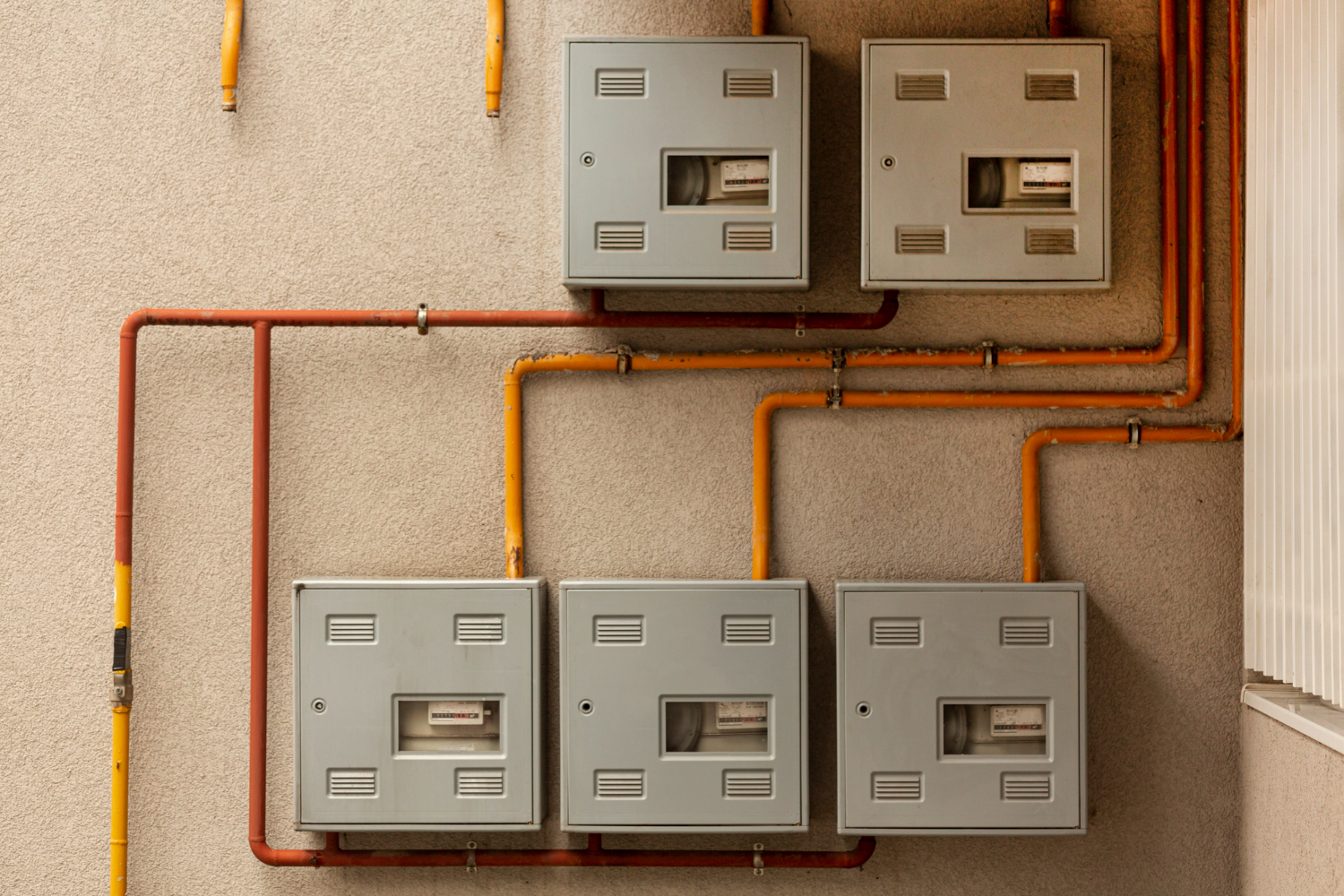
Smart metering failures are usually blamed on the most visible component in the system: the meter. When data stops flowing, when reads go missing, or when billing gaps appear, the instinctive response is to question meter accuracy or firmware. But in most real-world deployments, the meter is rarely the first thing to fail.
The weak link is almost always communication.
In Indian grid conditions, it is the Network Interface Card, the small but critical layer that connects a meter to the utility system, that faces the harshest operating reality. Heat, voltage noise, enclosure shielding, signal interference, and inconsistent network availability all converge here. When communication breaks down, even the most accurate meter becomes effectively invisible.
Understanding why this happens, and how to design around it, is essential for utilities and AMISPs aiming for reliable, large-scale smart metering.
Why Meters Survive and Communication Struggles
Meters are designed first and foremost to measure energy. Their electrical measurement circuits are well understood, standardized, and heavily tested. Communication, on the other hand, lives at the intersection of electrical noise, radio behavior, and physical installation constraints.
In Indian distribution environments, communication cards are exposed to conditions that are rarely captured in lab tests:
- High ambient temperatures inside sealed enclosures
- Voltage fluctuations and harmonic noise on supply lines
- Dense RF environments in urban clusters
- Weak cellular coverage in rural and semi-urban pockets
- Metallic enclosures that unintentionally block signals
- Antennas mounted wherever space is available, not where signal quality is ideal
In these conditions, RF-only NICs struggle with interference and range, while cellular-only NICs depend entirely on network availability and SIM stability. When either fails, data reliability collapses.
Why Single-Mode NICs Break Down at Scale
Single-mode communication architectures assume uniform conditions. The grid is anything but uniform.
RF-only NICs can perform well in dense, planned clusters, but their reliability drops sharply in dispersed layouts, high-rise buildings, or noisy electromagnetic environments. Cellular-only NICs offer reach but introduce recurring operational costs, dependency on telecom networks, and vulnerability to congestion or signal loss.
At a small scale, these limitations are manageable. At scale, they multiply. Missed reads turn into revenue leakage. Field visits increase. Consumer trust erodes. What appears to be a metering issue is, in reality, a communication design problem.
Designing NICs For Grid Reality Not Ideal Conditions
Probus approaches NIC design as infrastructure engineering, not electronics packaging. Every NIC is designed with the assumption that it will operate in imperfect conditions for years, often without physical access.
Across products such as the Genus 1PH RF NIC, Genus 3PH RF NIC, Genus 3PH 4G + BLE NIC, and the Tech OVN 1PH NIC Card, several design principles remain consistent:
Feeder pillar failures rarely occur without warning. Stress accumulates quietly in the form of voltage fluctuations, abnormal switching patterns, and rising heat long before visible damage appears. The challenge for utilities has never been the absence of signals, but the absence of continuous visibility.
Voltage monitoring acts as the earliest indicator. It exposes overload, phase imbalance, and upstream stress conditions that slowly weaken insulation and components over time. These patterns often emerge days or weeks before a fault becomes a failure.
On-off status tracking brings precision to fault analysis. Every switching event is logged, removing ambiguity around manual intervention, unintended outages, or delayed restoration. This accountability shortens diagnosis cycles and reduces repeated site visits.
Fire and temperature detection address the most vulnerable point in the low-voltage network. Early thermal alerts provide a critical window to intervene before overheating escalates into equipment damage, service disruption, or safety incidents.
Taken together, these signals transform feeder pillars from blind spots into continuously monitored assets, offering a real-time view of network health rather than post-failure explanations.
These are not features visible on a datasheet, but they determine whether a device survives year five in the field.
Why Hybrid NIC Architecture Is a Reliability Decision
Hybrid NICs are often discussed as advanced or premium options. In practice, they are a reliability response to unpredictable environments.
By combining RF and cellular capabilities with local Bluetooth access, hybrid NICs allow communication paths to adapt dynamically. When RF conditions degrade, cellular can maintain continuity. When cellular connectivity is unavailable or expensive, peer communication and local access preserve operability.
This architecture reduces single points of failure. It ensures that meters remain reachable, readable, and serviceable even when one communication layer underperforms. Over a multi-year deployment, this adaptability is what prevents stranded assets.
Communication As The Foundation of Grid Intelligence
Smart metering is no longer about data collection alone. It is about enabling theft detection, outage intelligence, power quality monitoring, and predictive maintenance. None of these functions work reliably if communication falters.
A resilient NIC card is not a peripheral component. It is the foundation on which grid intelligence rests. When communication is stable, analytics can function. When it is not, even the best software remains blind.
This is why Probus treats NIC design as a first-order engineering problem. Not because communication is glamorous, but because it is unforgiving.
Building Systems That Last Not Just Deploy
Utilities do not measure success by installation numbers alone. They measure it by years of stable operation, predictable costs, and consistent data flow. NICs designed for laboratory conditions cannot meet that standard.
NICs designed for grid reality can.
By focusing on resilience, adaptability, and field-driven design, Probus builds communication layers that outlast the noise, heat, and complexity of real networks. When communication holds, meters perform as intended. When it fails, everything downstream fails with it.
The difference is not in the meter. It is in the NIC.
 About us


We specialize in delivering innovative energy solutions that drive efficiency and sustainability. With our cutting-edge hardware and software offerings, we empower businesses to optimize their energy consumption, reduce costs, and make a positive environmental impact.



 May 25, 2025